Tessera Studios / Outright Games
Star Trek: Prodigy
Supernova
Overview
Star Trek Prodigy: Supernova is a narrative-driven action-adventure based on the animated series. The project focuses on cooperative gameplay, accessible puzzle-solving and exploration designed for a younger audience while maintaining the structure and pacing of a full adventure title.
Announcement Trailer
My Role
As Level Designer / Game Designer, I managed the full end-to-end lifecycle of the levels — from initial layout to final product — acting as a cross-departmental bridge between Art and Programming teams.
- Level design: shaping each space around the narrative beat it carries, then iterating until the playable layout and the story land together.
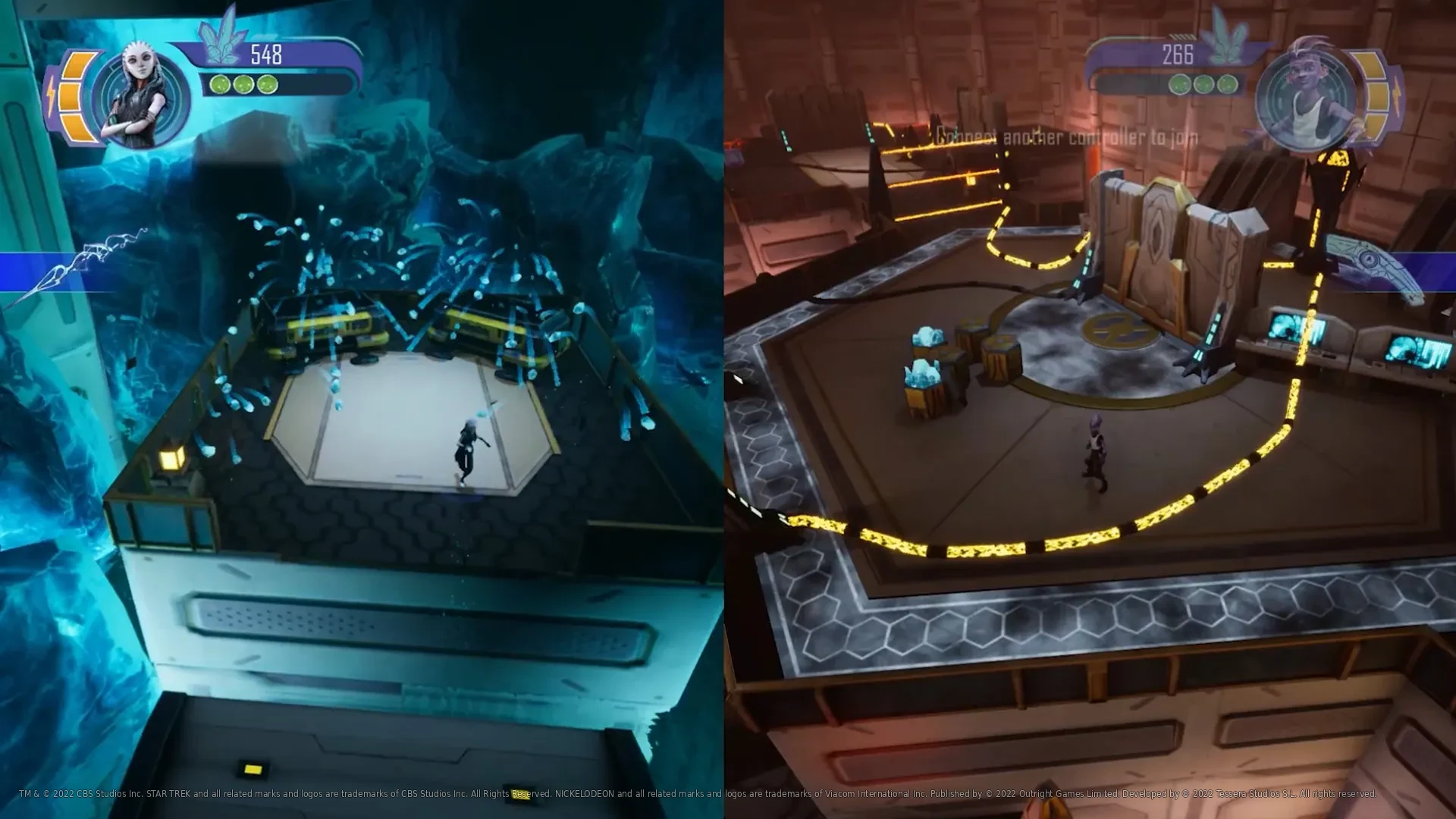
- Co-op systems: designing the two-player interactions so both players stay active at once — the constraint that drove most of my layout decisions.
- Navigation: structuring exploration, encounter pacing and objective clarity so players always know where to go without a marker holding their hand.
- Economy: owning the in-game economy end-to-end — distribution, pricing and reward tuning — so progression always felt earned.
- Cross-discipline: acting as the bridge between design, narrative and art to keep every level true to the Star Trek tone.
Design Pillars
Iteration & Problem Solving
Key Takeaways
Designing for Co-op
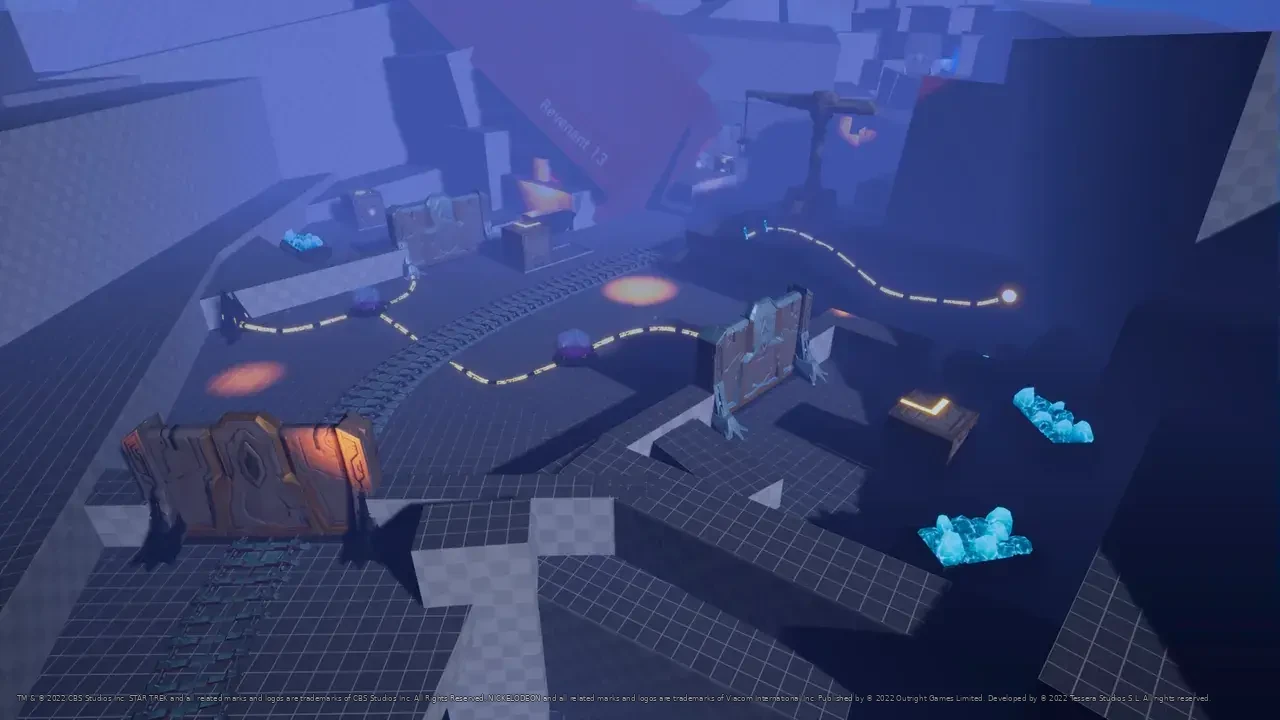
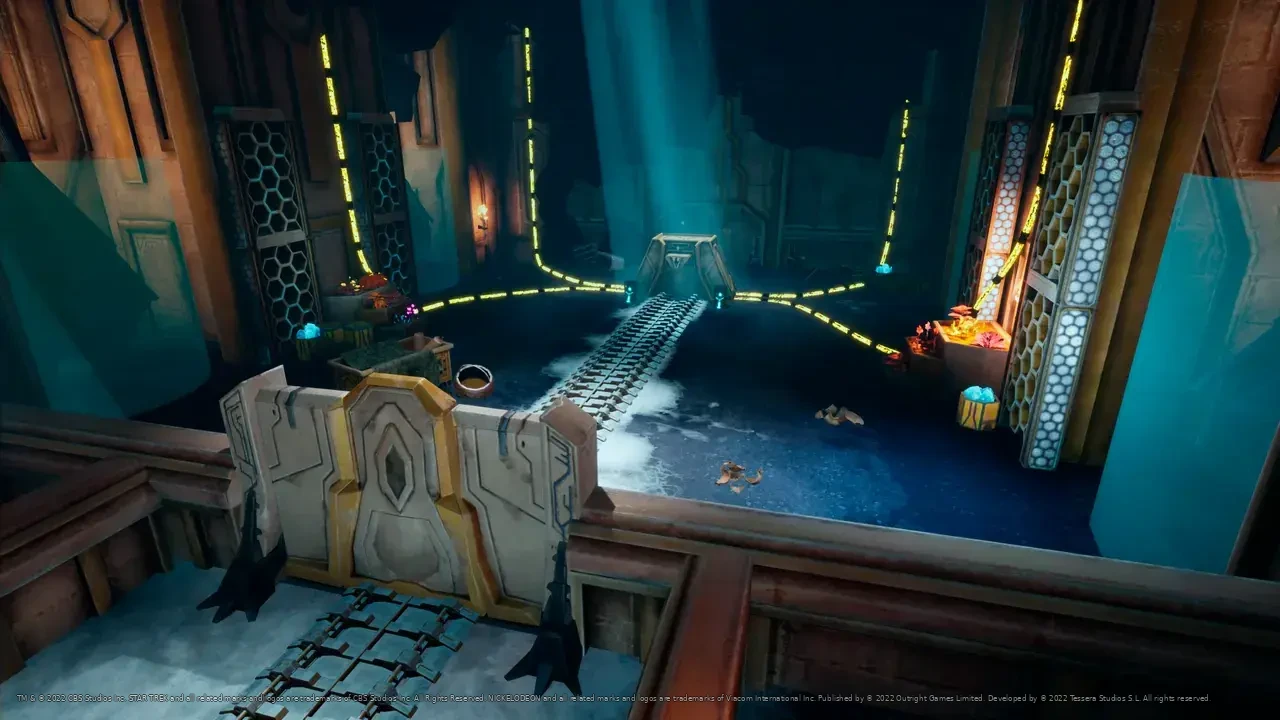
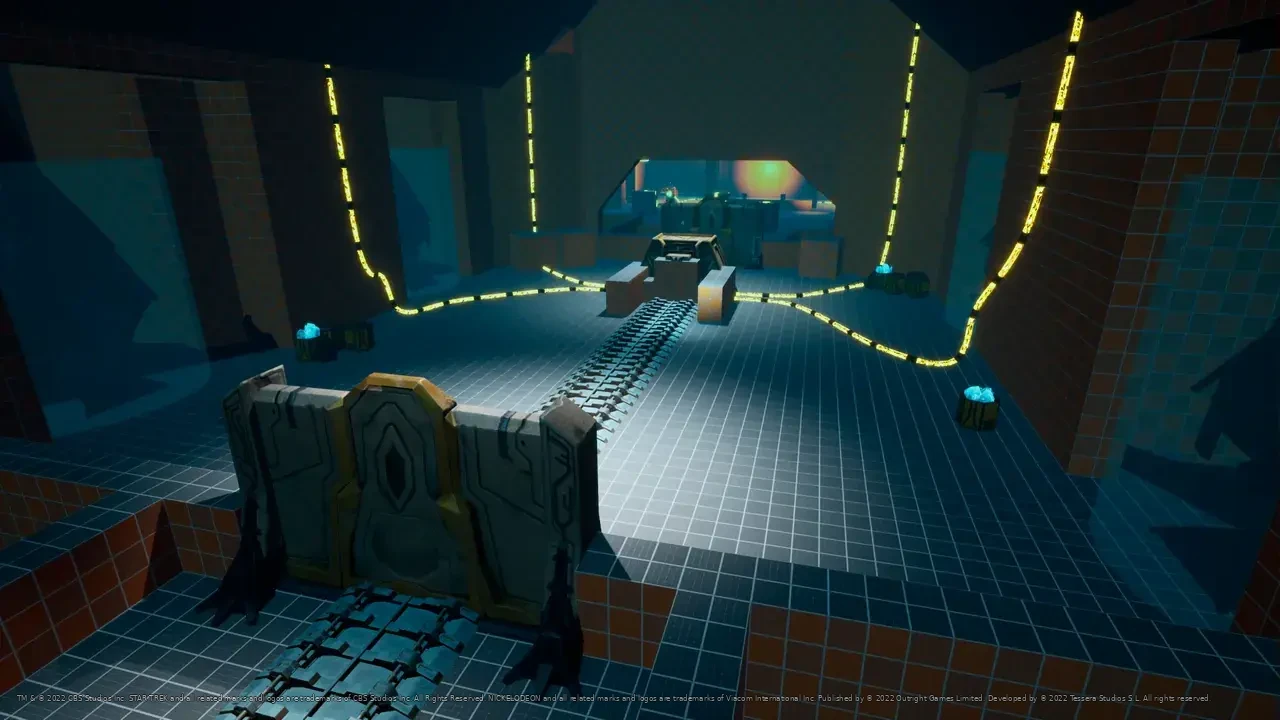
Transforming narrative concepts into playable spaces that work for two players simultaneously — the core challenge of this project. Every layout decision had to hold up under solo play, full co-op, and the edge cases in between: one player exploring while the other waits, or both taking completely different paths through the same space.
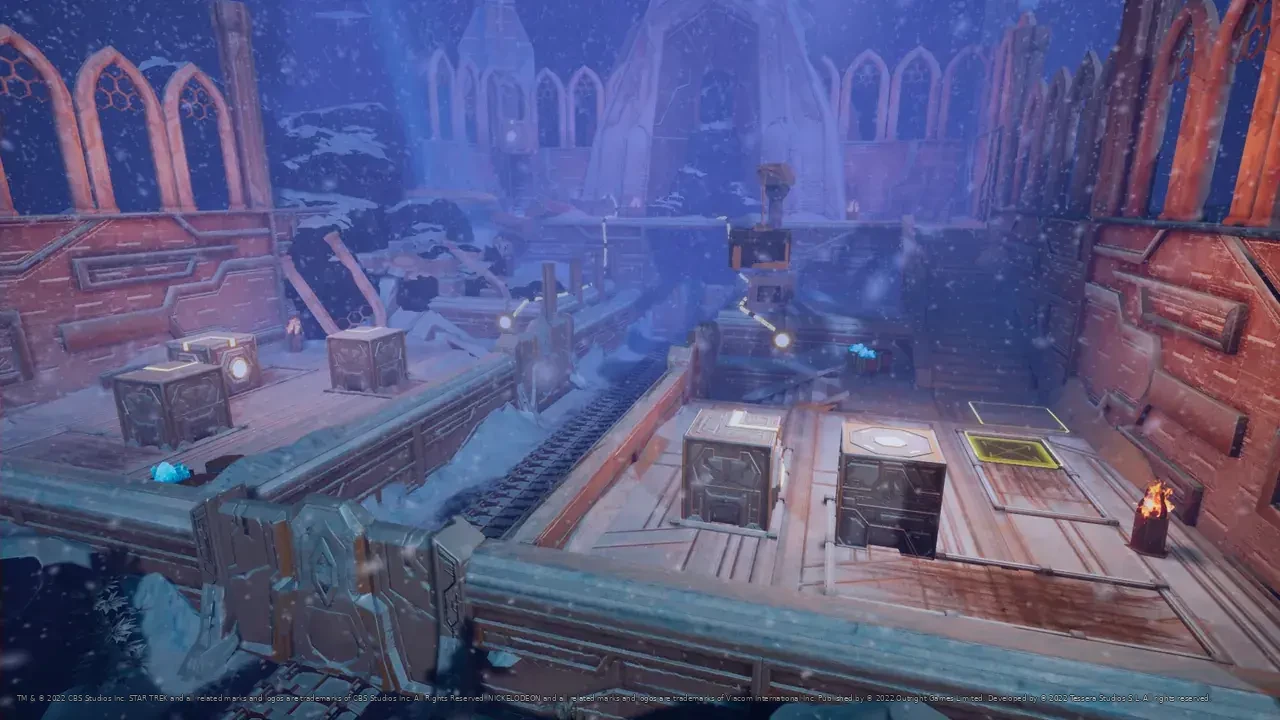
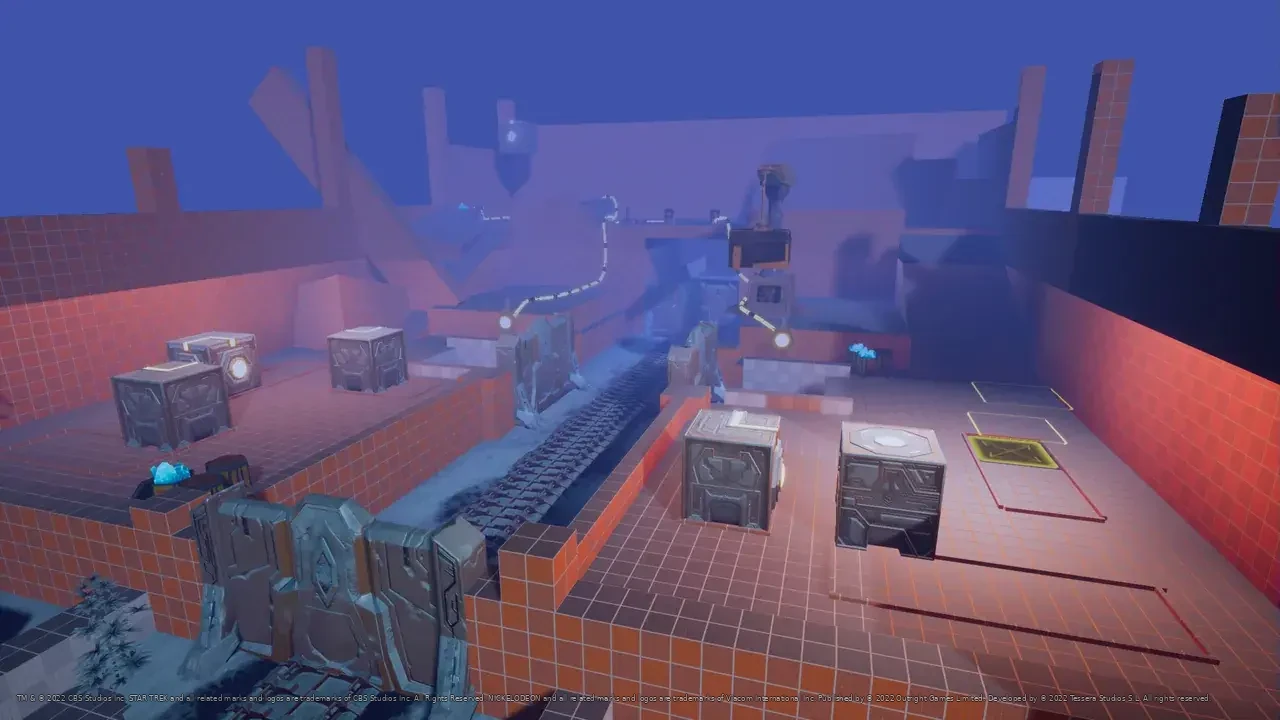
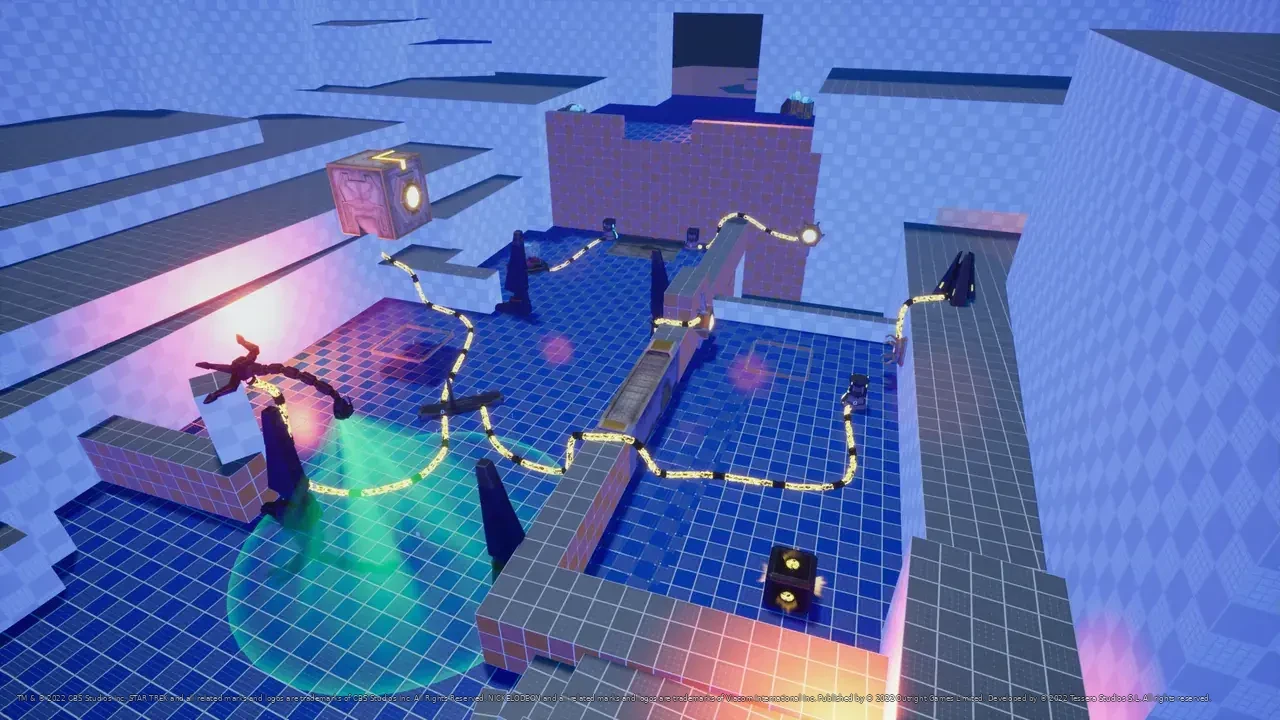
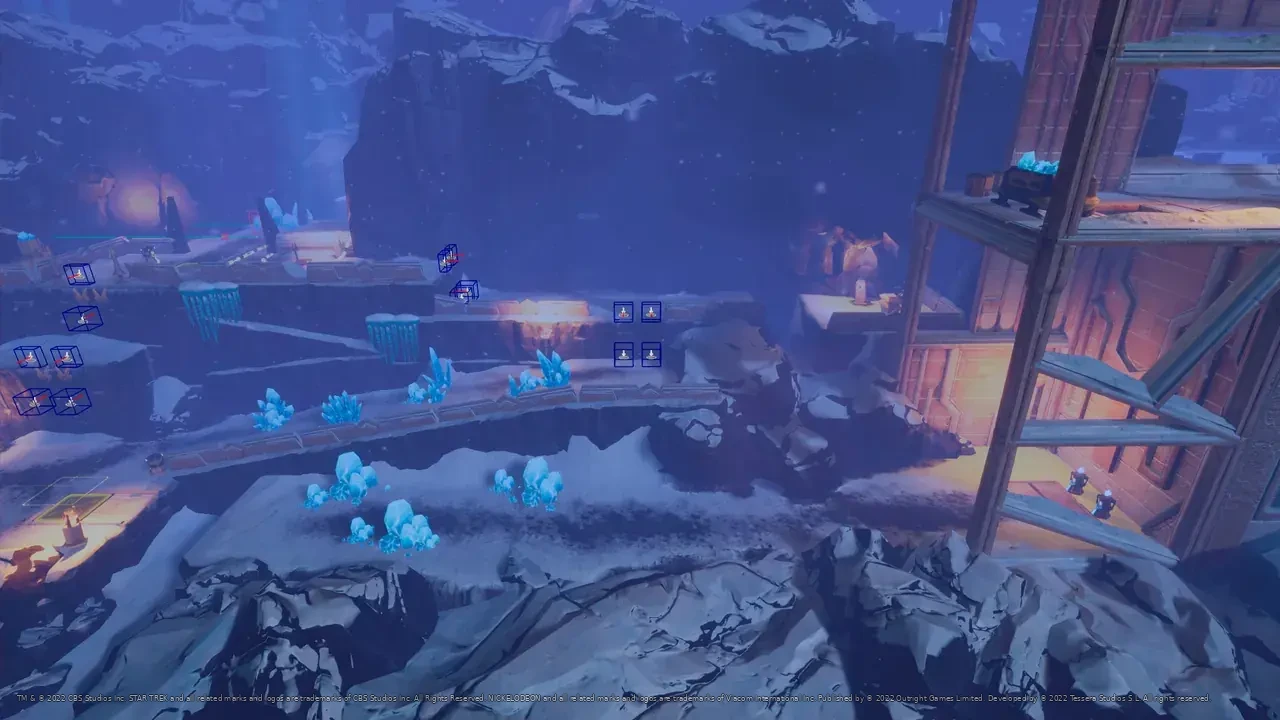
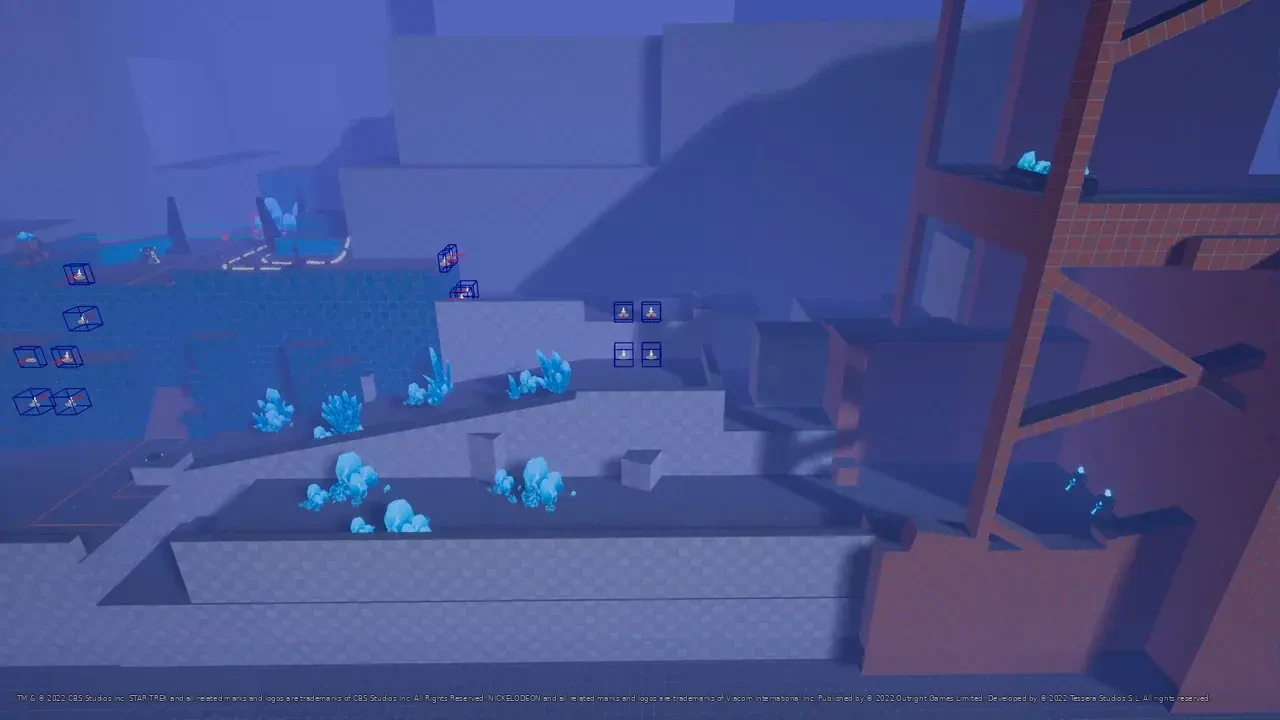
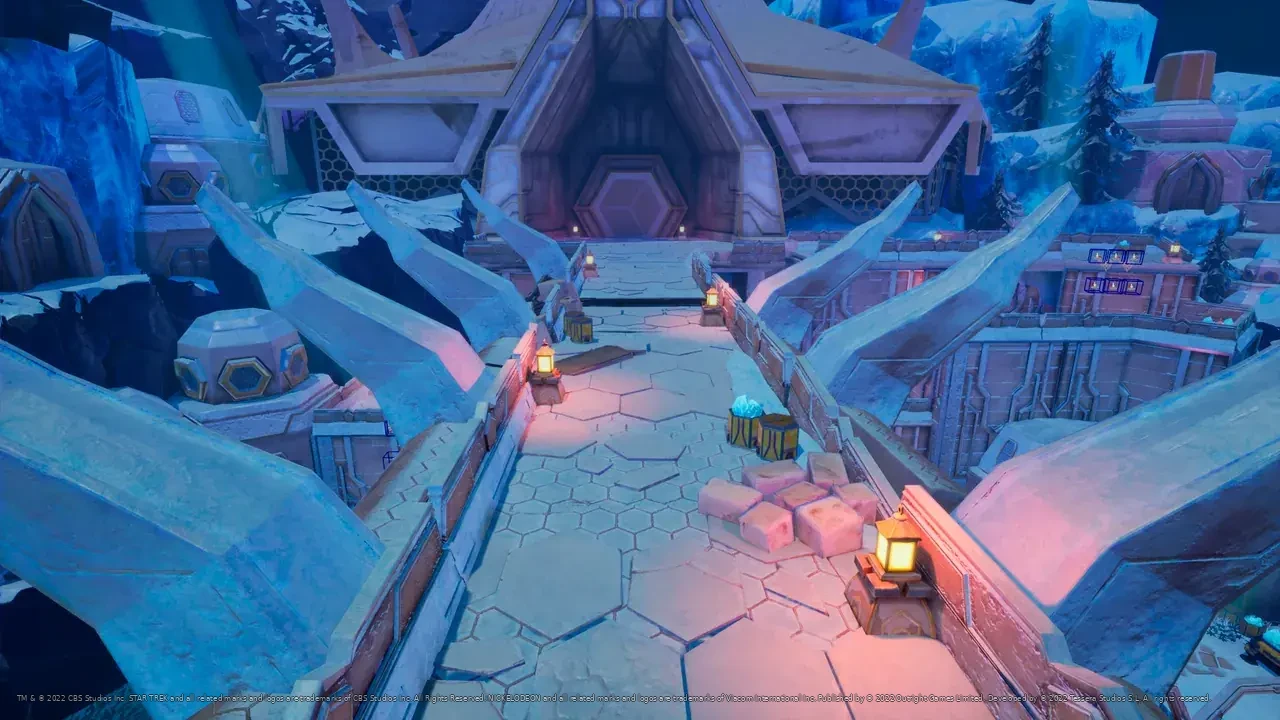
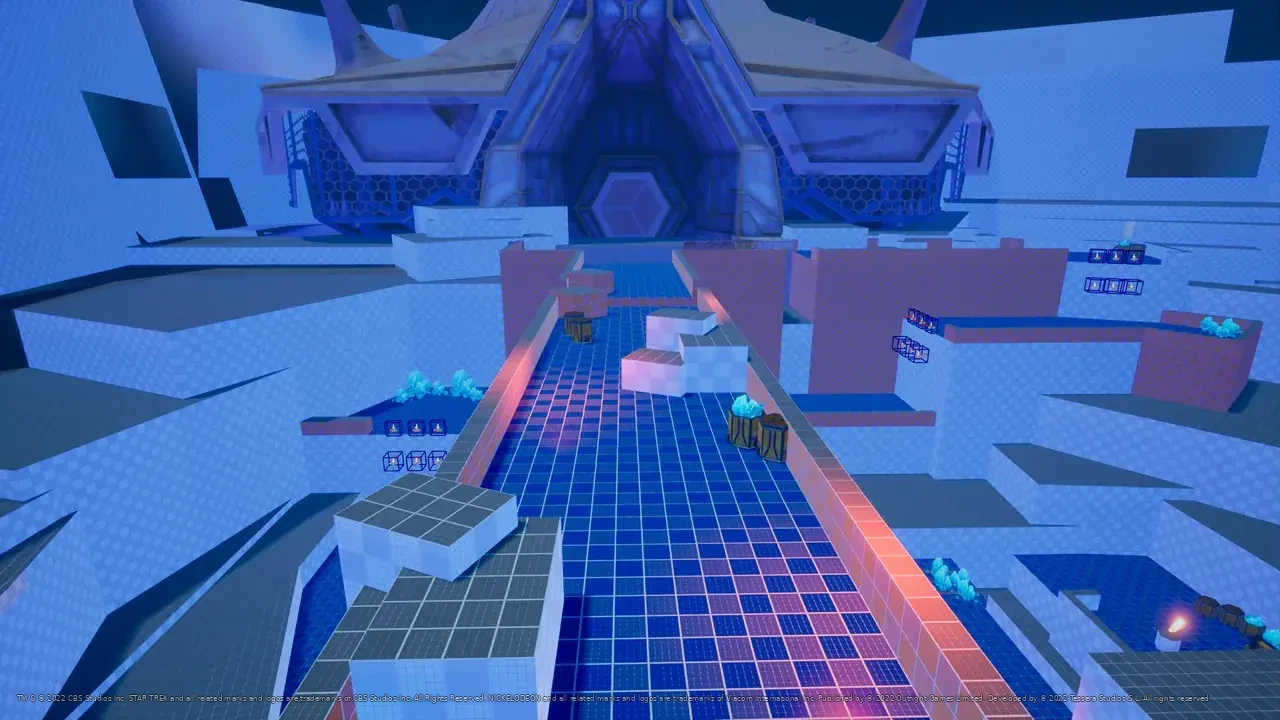
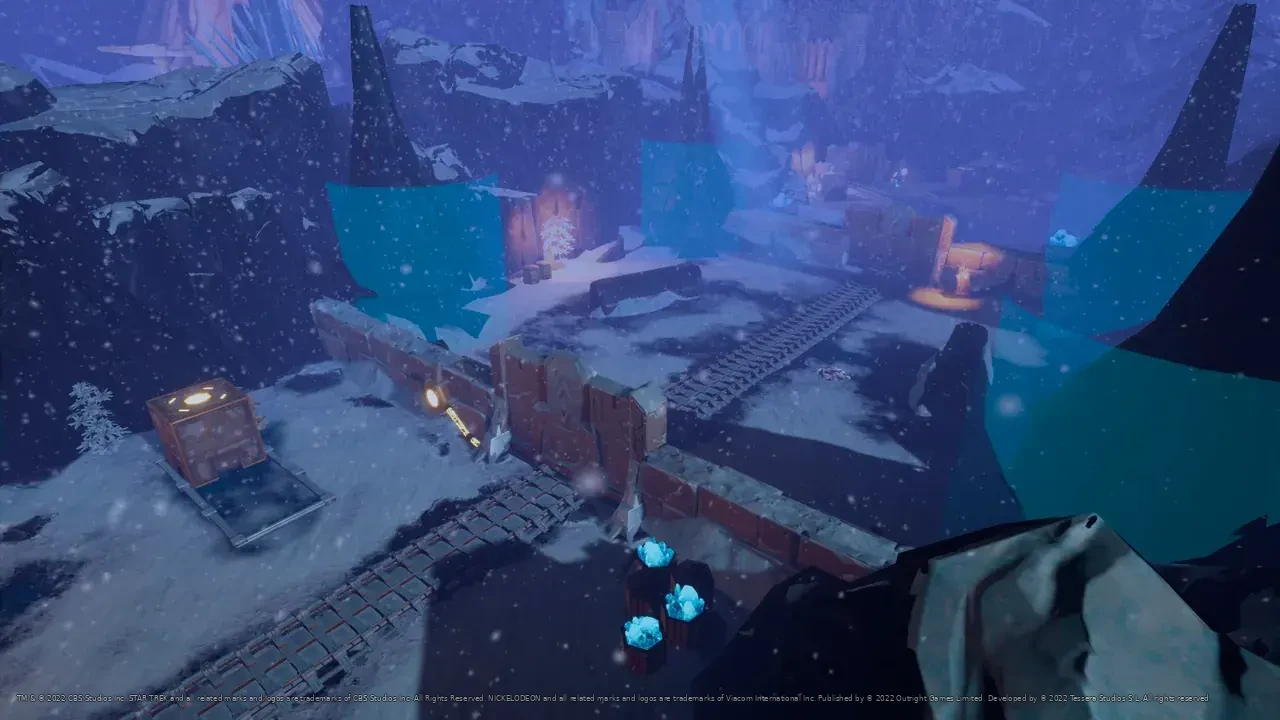
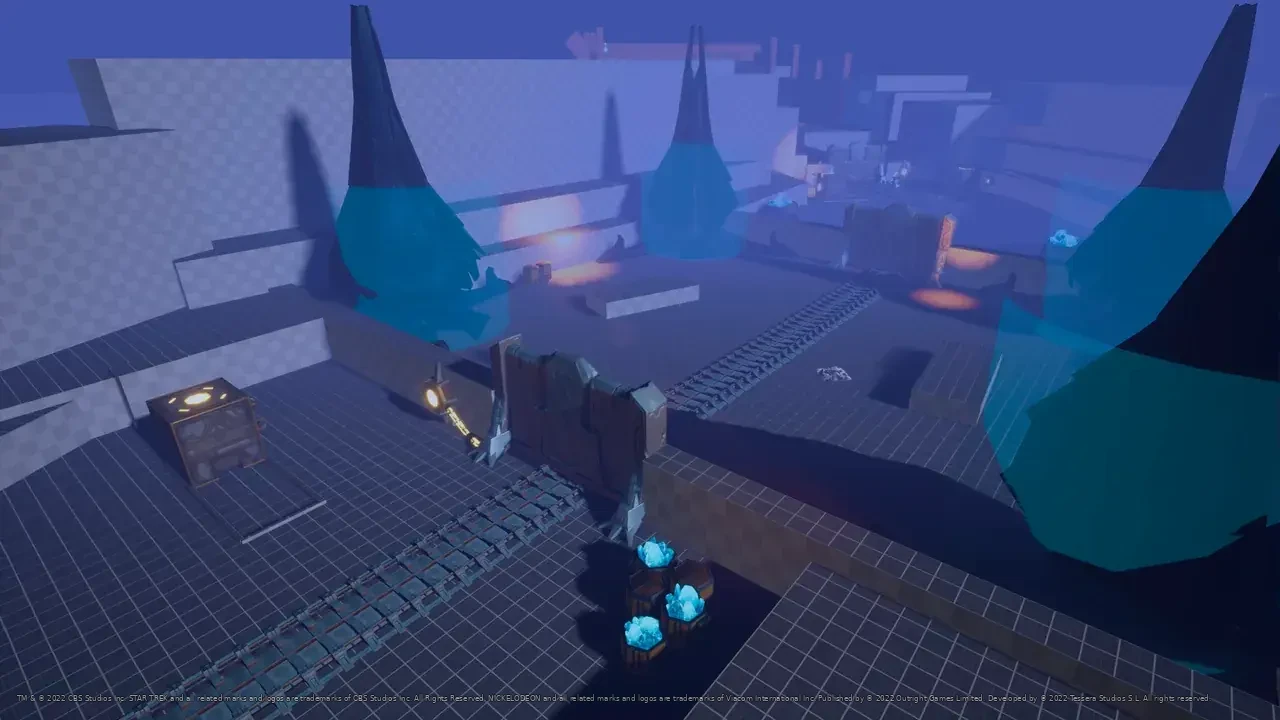
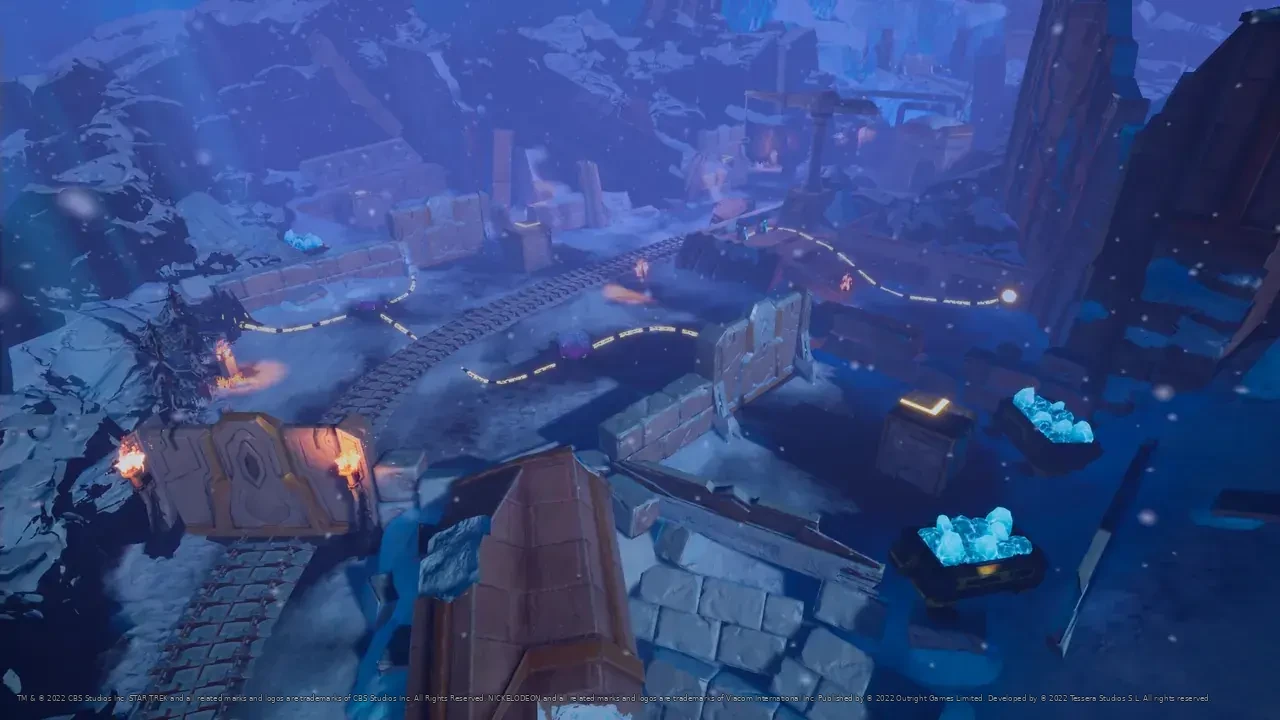
- Full Development Cycle: Managed the process from initial greybox blockouts to final implementation, collaborating closely with Environment Artists to maintain visual fidelity without compromising gameplay.
- Combat Arena Design: Worked alongside the Combat Designer to create spaces tailored to encounter requirements — cover placement, lines of sight and navigation zones.
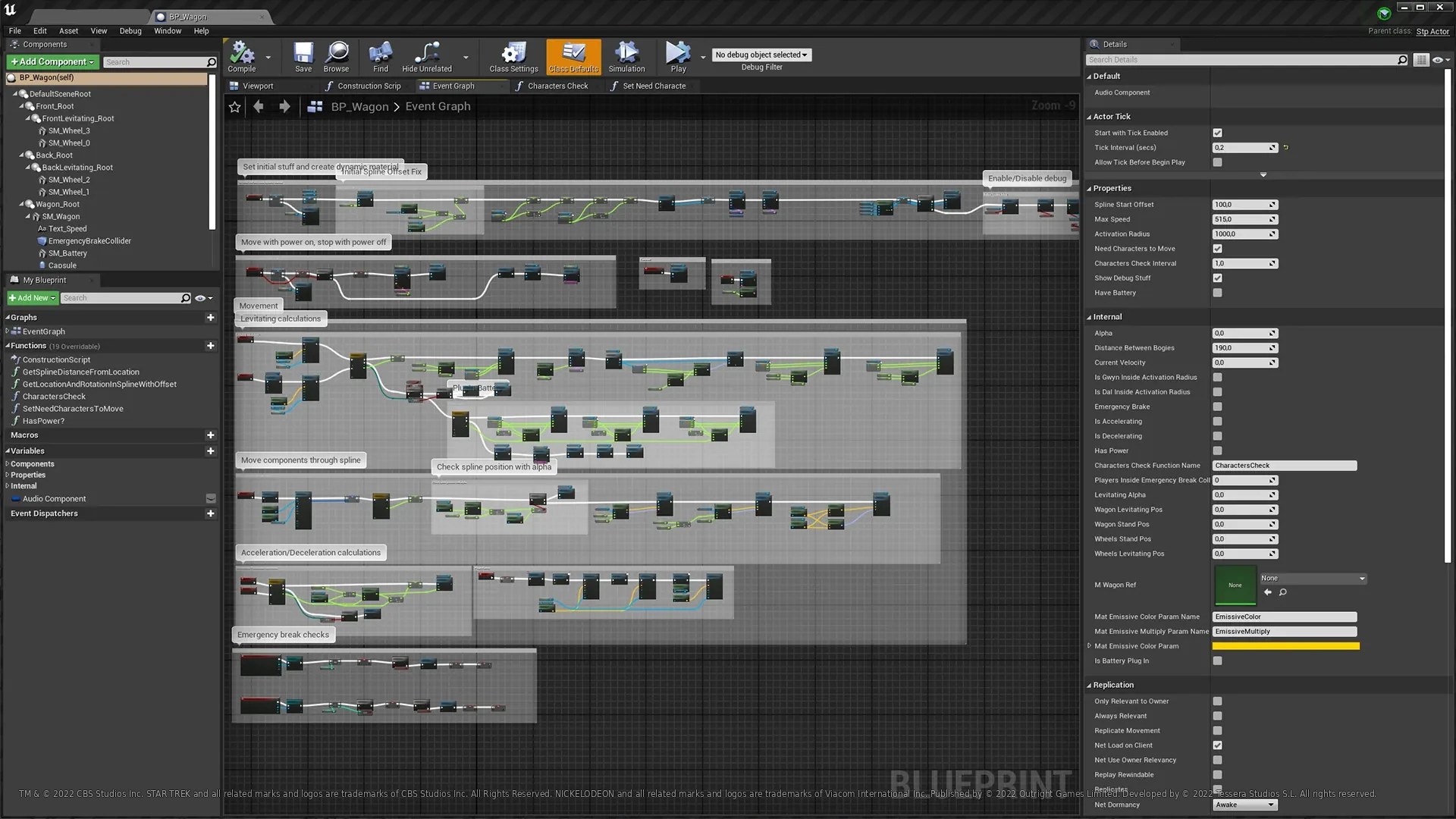
- Technical Implementation: Utilized Blueprints to bring levels to life, scripting world events, camera systems and logical triggers for a fluid and reactive player experience.
- Economy & Metrics: Balanced the distribution of collectibles and resources, and defined achievement metrics to ensure exploration felt consistently rewarding.
Pacing Structure
Loop
Greybox to Final — Level Progression
Cooperative Puzzles
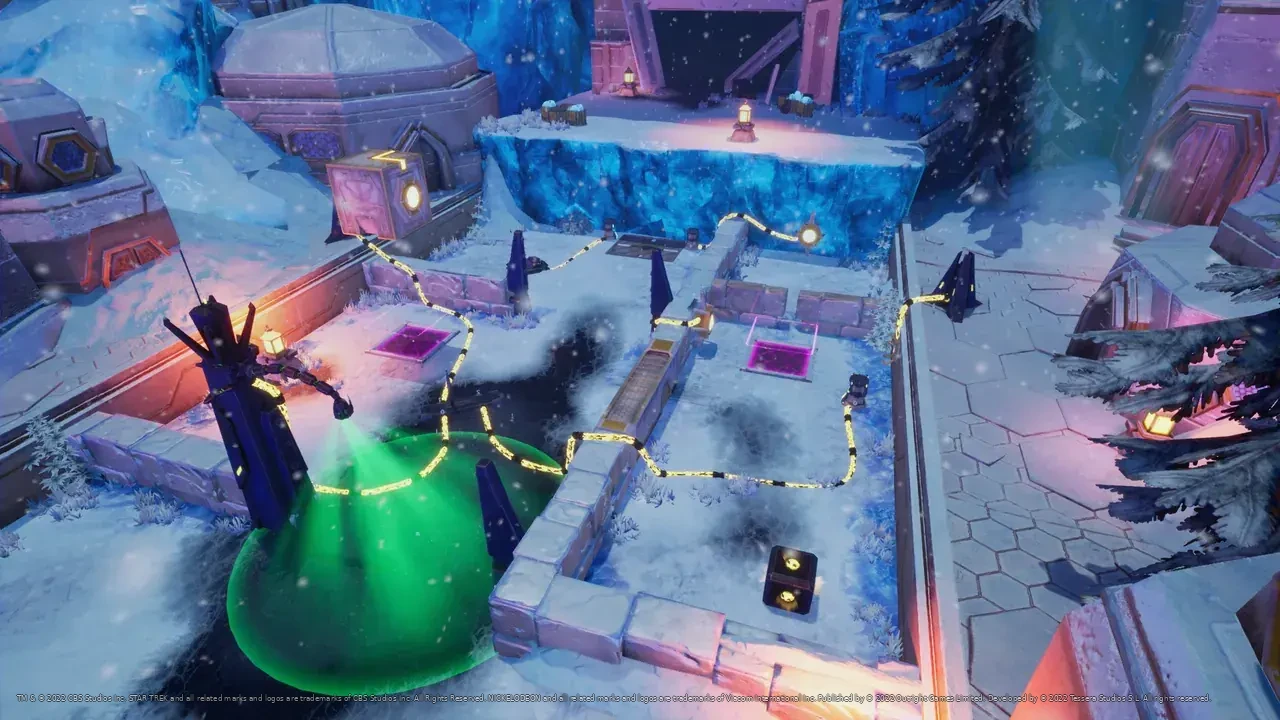
Puzzle design for co-op has a unique constraint: both players must feel useful at the same time. My goal was to build challenges that leveraged each character's specific gadget, forced communication between players, and scaled clearly in difficulty — without ever creating a situation where one player watches the other solve it alone.
- Cooperative mechanics: I built puzzles around each character's specific gadget so they only resolve through coordination — neither player can brute-force them alone.
- Difficulty curve: I introduced each new mechanic in isolation before layering them, so complexity ramps up without ever ambushing a younger player.
- Child-friendly design: I kept the puzzles intuitive and backtrack-free and tied them to the Star Trek lore, so the challenge never came from confusion.
- Secret two-stage puzzles: I added an optional second phase that unlocks hidden puzzles — rewarding curious players without ever gating the main path for everyone else.
Puzzle Videos




Seven cooperative puzzles from the shipped game — one clip per puzzle.
Time Puzzles
The time travel puzzles were the most technically complex mechanics in the game — and the most satisfying to design. One character travels to the past version of the same space, making changes that dynamically alter the future: clearing blocked paths, triggering mechanisms, making puzzle elements appear. The challenge was engineering a system where past actions produce logical, predictable consequences in the future without creating dead ends.
- Dual-state environment scripting: I scripted two synced versions of the same space — past and future — so every change a player makes in the past propagates to the future in real time, the core fantasy of the mechanic.
- Causal logic design: I mapped every past action to its future consequence before scripting a line — a strict cause-effect tree was the only way to guarantee no paradoxes, soft-locks or dead ends shipped.
- Difficulty pacing: I gave the first time-travel puzzle a single variable and added one more each time — appearing elements, vanishing enemies, activating platforms — so players learned the system instead of being handed it.
- Edge-case testing: I led the testing of timeline conflicts — partial past actions, early returns — because in a system like this the hard part isn't the mechanic, it's making sure no edge case breaks the game state.
Time Puzzle Videos


The time-travel puzzles in action: changes made in the past reshape the present-day space.
Technical Scripting
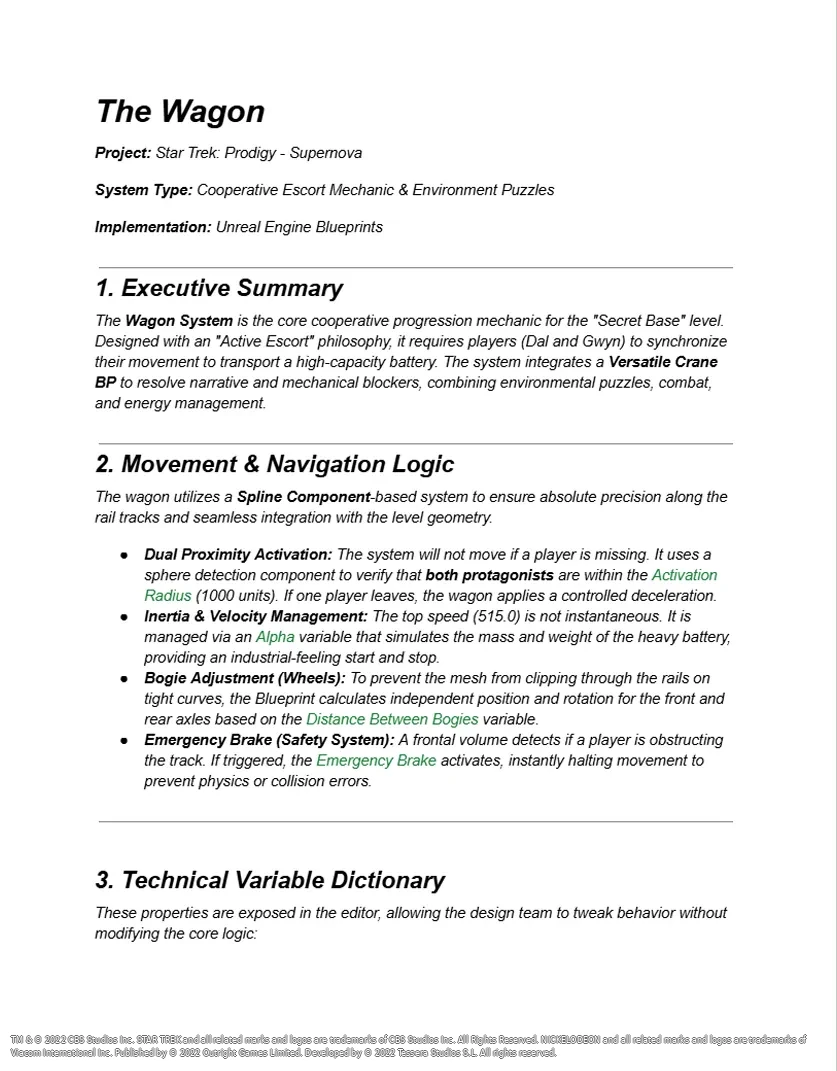
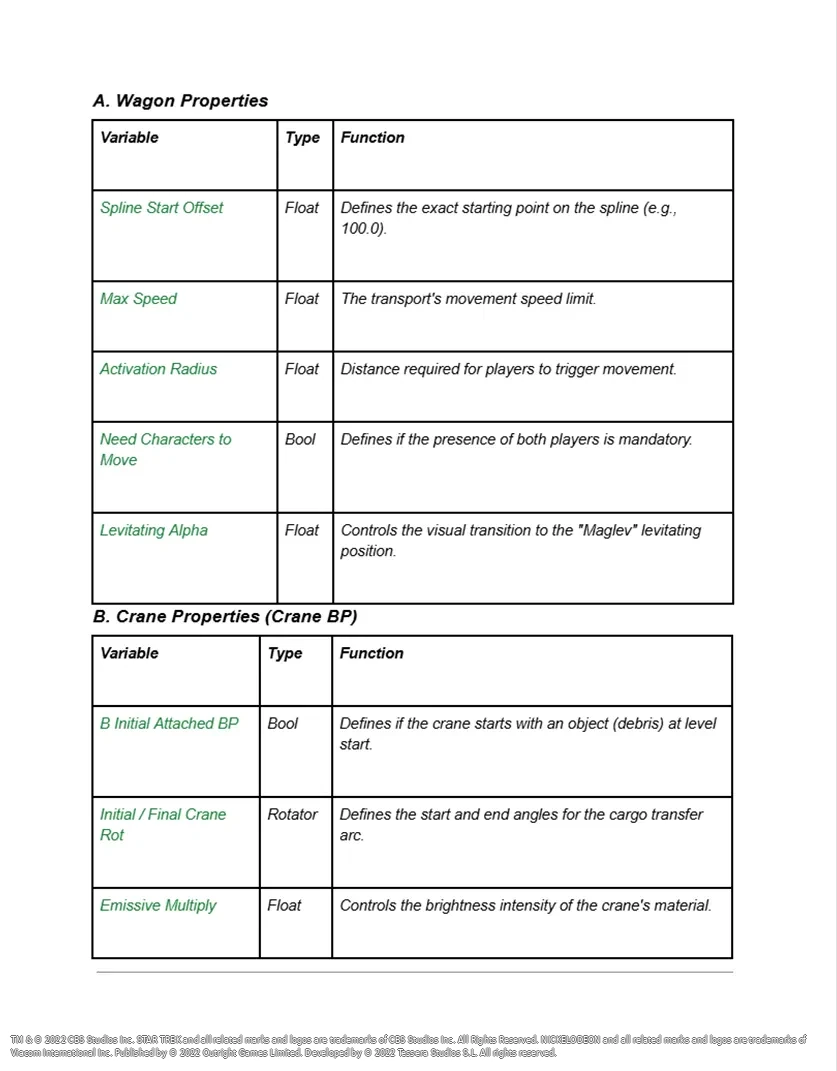
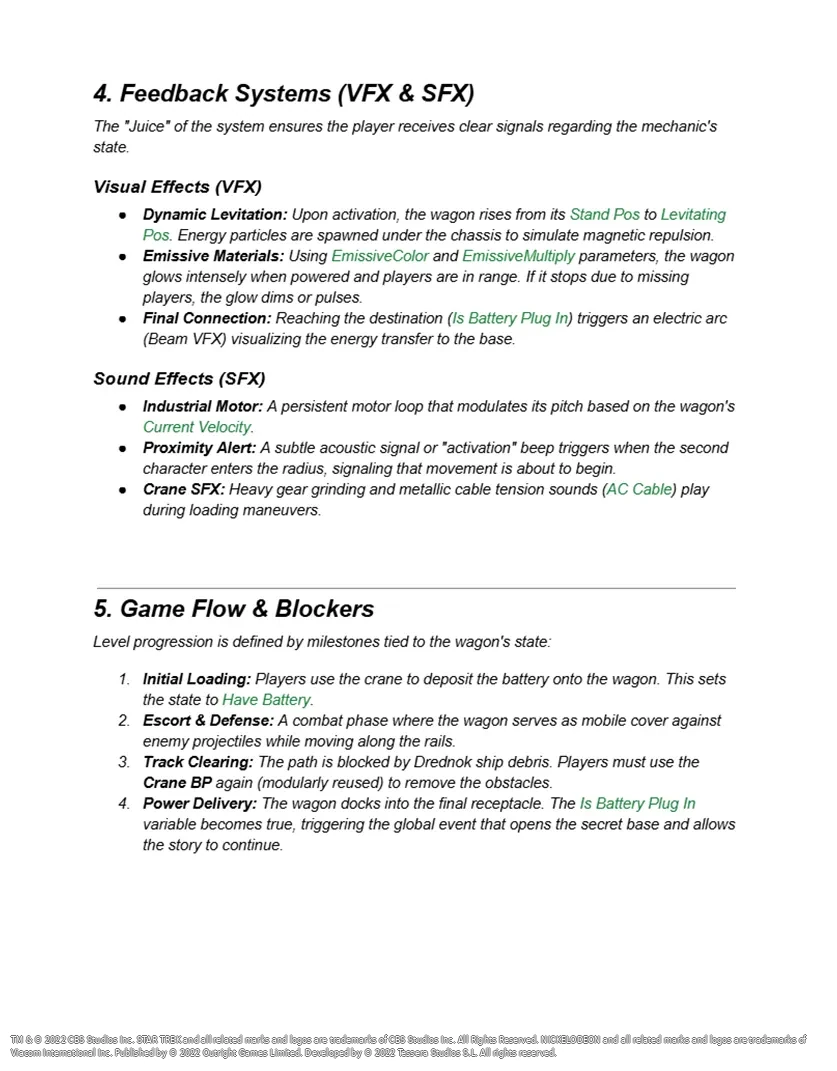
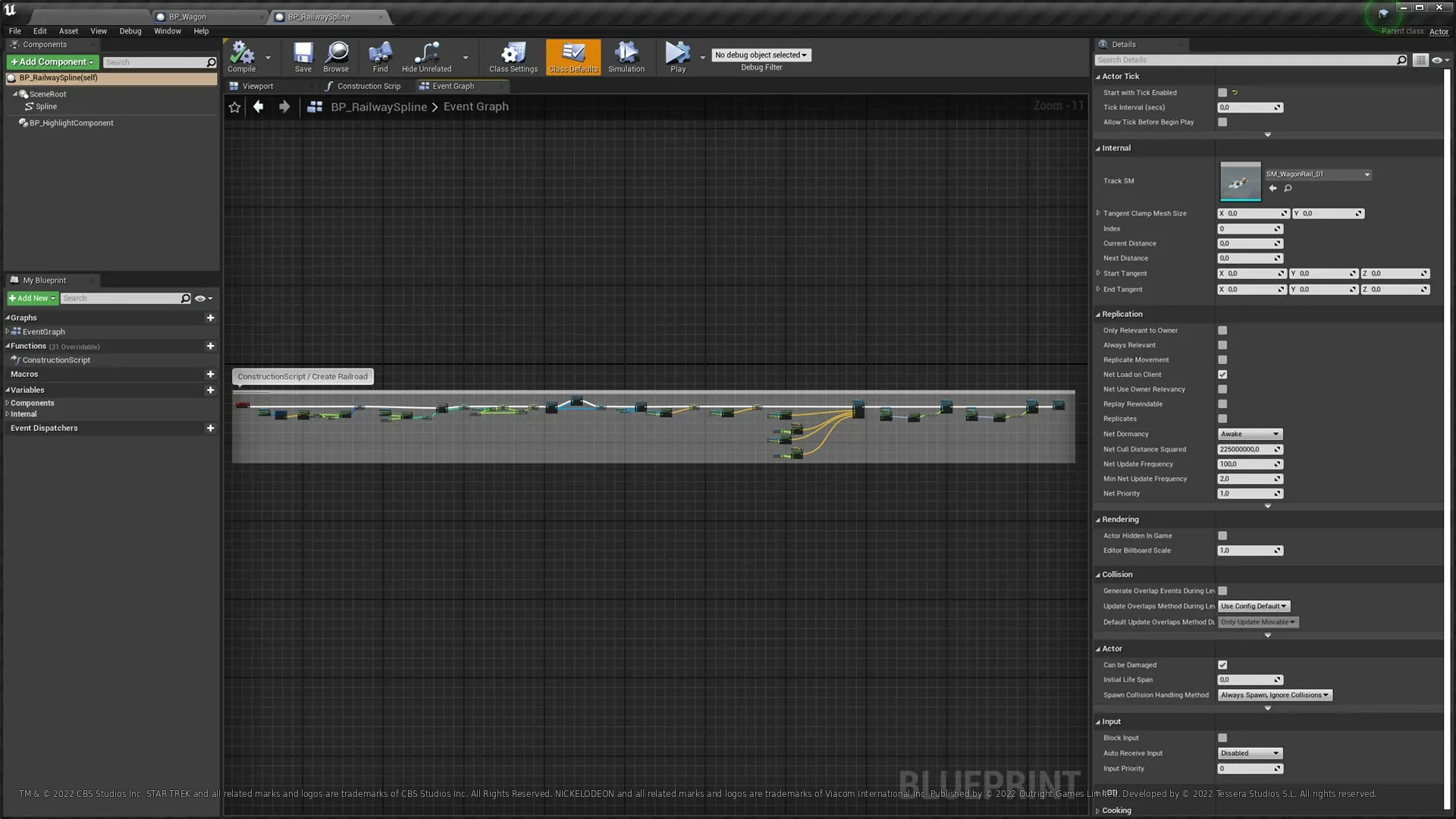
Beyond layout, I owned the full technical implementation of specific mechanics in Unreal Engine Blueprints — from first prototype to shipped build. The TDD documents below are the design specifications I wrote before scripting, defining expected behaviour, edge cases, and acceptance criteria for each system.
- Production-ready Blueprints: I scripted bespoke solutions for specialized puzzle elements that shipped as-is — design and implementation in the same hands, no engineering handoff needed.
- Heavy-battery transport system: I programmed the full logic for the cart that hauls a large battery across the level — movement, feel and environmental interaction — from first prototype to final build.
- Modular, self-sufficient systems: I built the Blueprints modular on purpose, so I could tune speed, thresholds and feel myself without waiting on an engineer — keeping iteration fast.
Wagon Showcase
The heavy-battery cart system I scripted in Blueprints, moving through the level.
TDD — Technical Design Document
Blueprint Scripting
Economy as a Design Tool
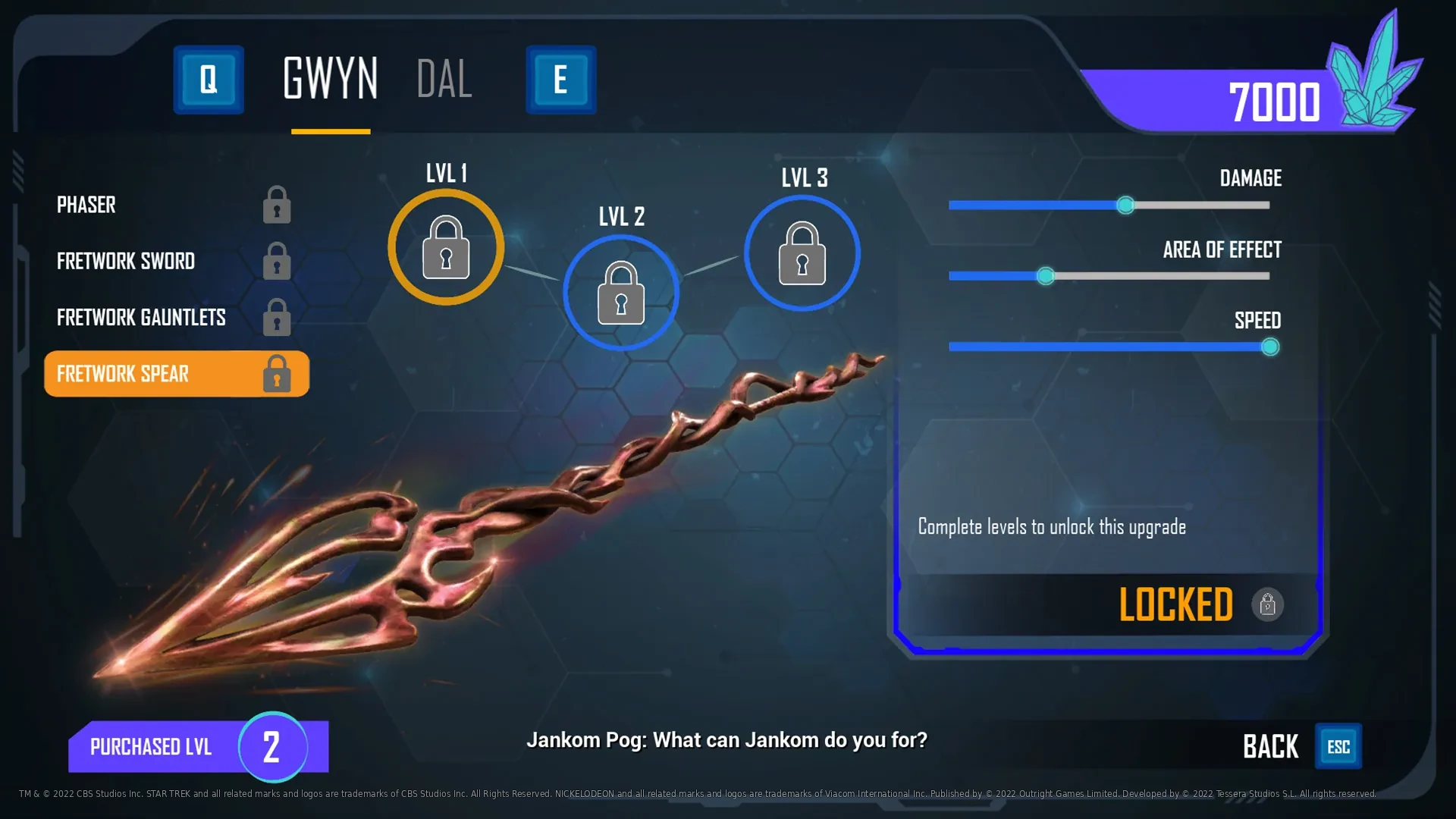
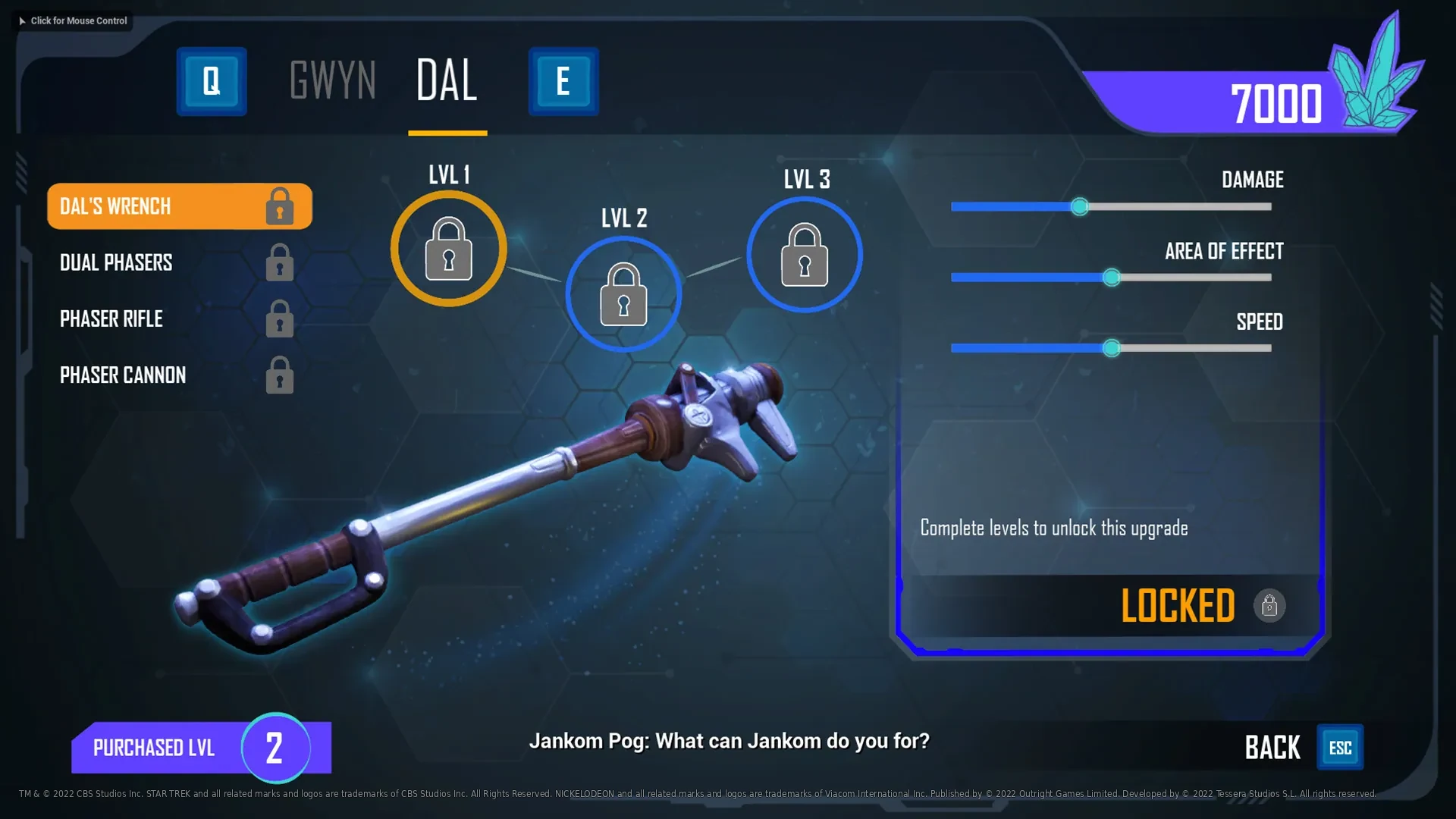
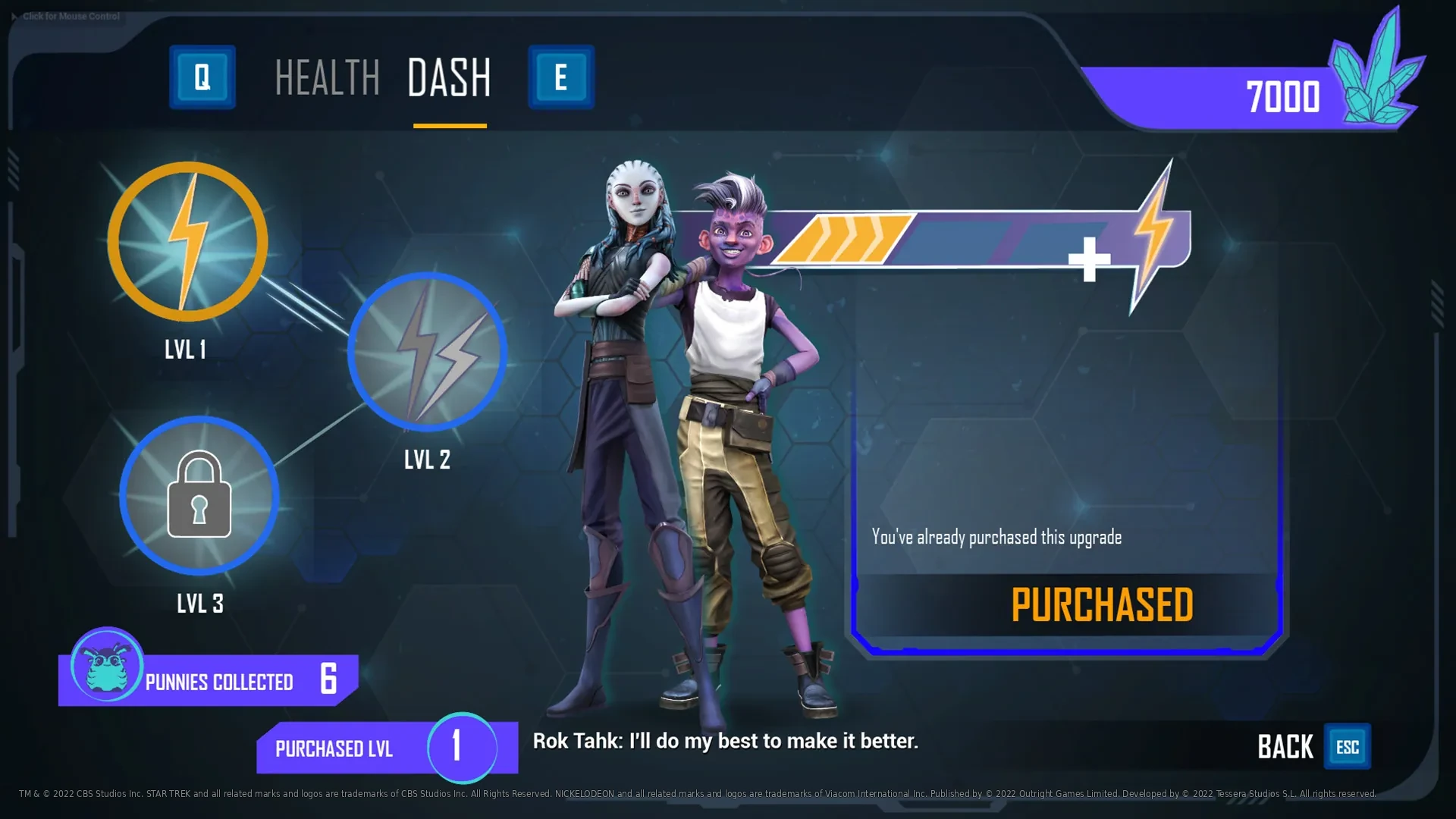
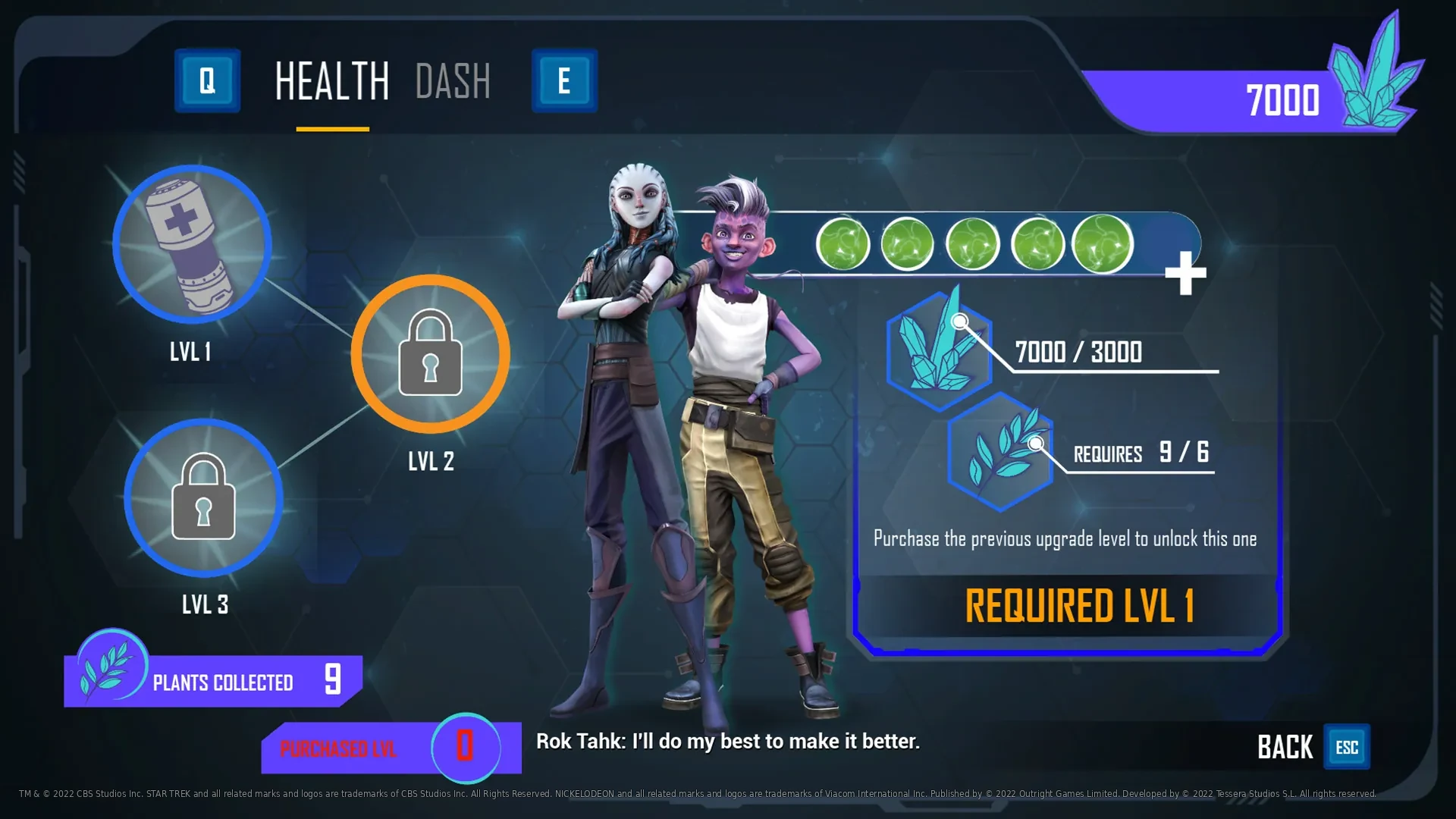
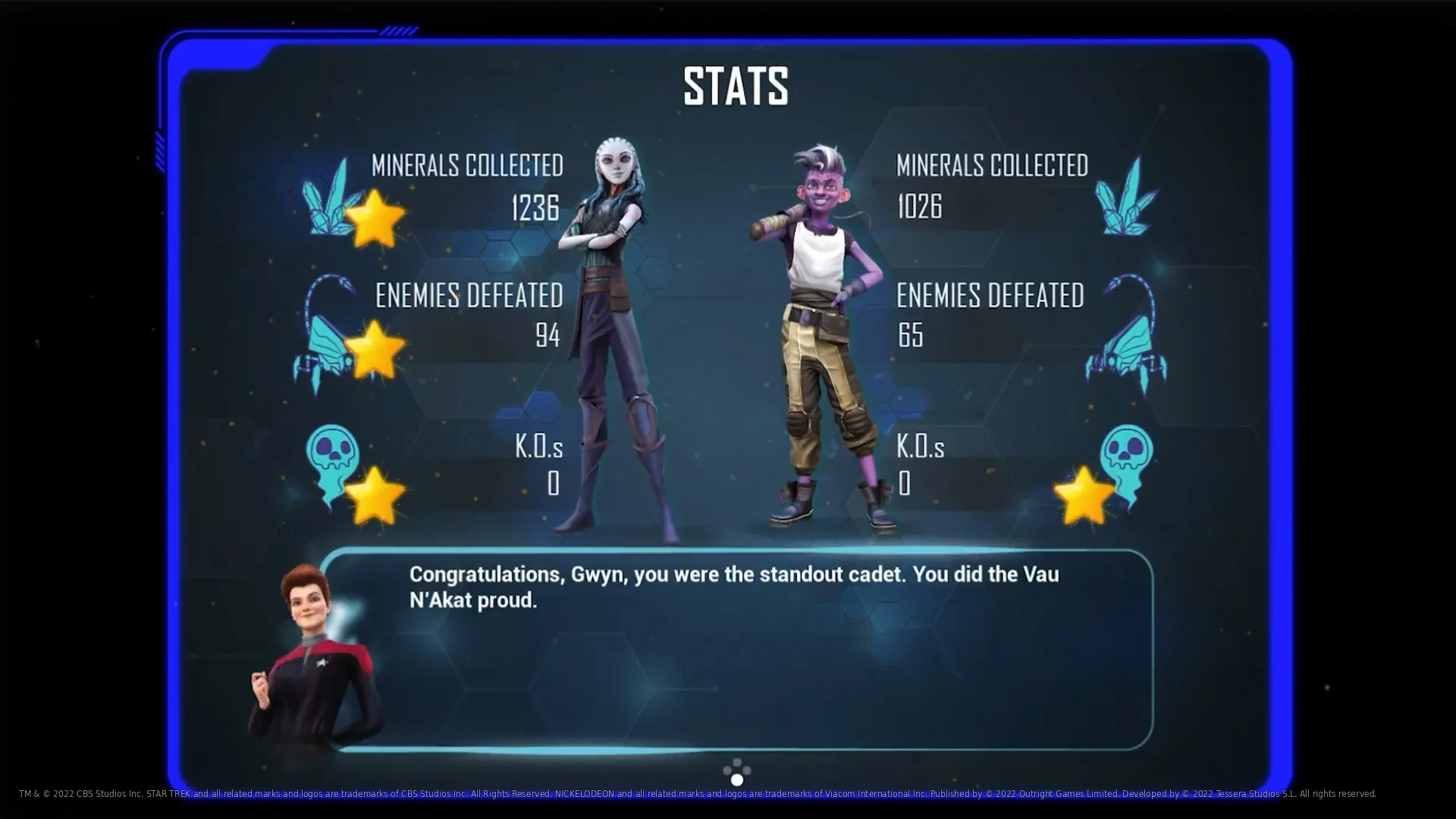
The economy was the backbone of player motivation — every mineral pickup, enemy drop and upgrade price had to feel fair while driving progression forward. I owned the full system: modelled in Excel first to simulate player cashflow across all levels, then implemented and tuned directly in Unreal Engine. Two upgrade shops, three characters, nine levels — all balanced without a dedicated systems designer.
- Economy modeling: I modeled the full value structure in Excel before touching the engine — a predictive model let me catch balancing errors before they reached the build and gave the team one source of truth to iterate from.
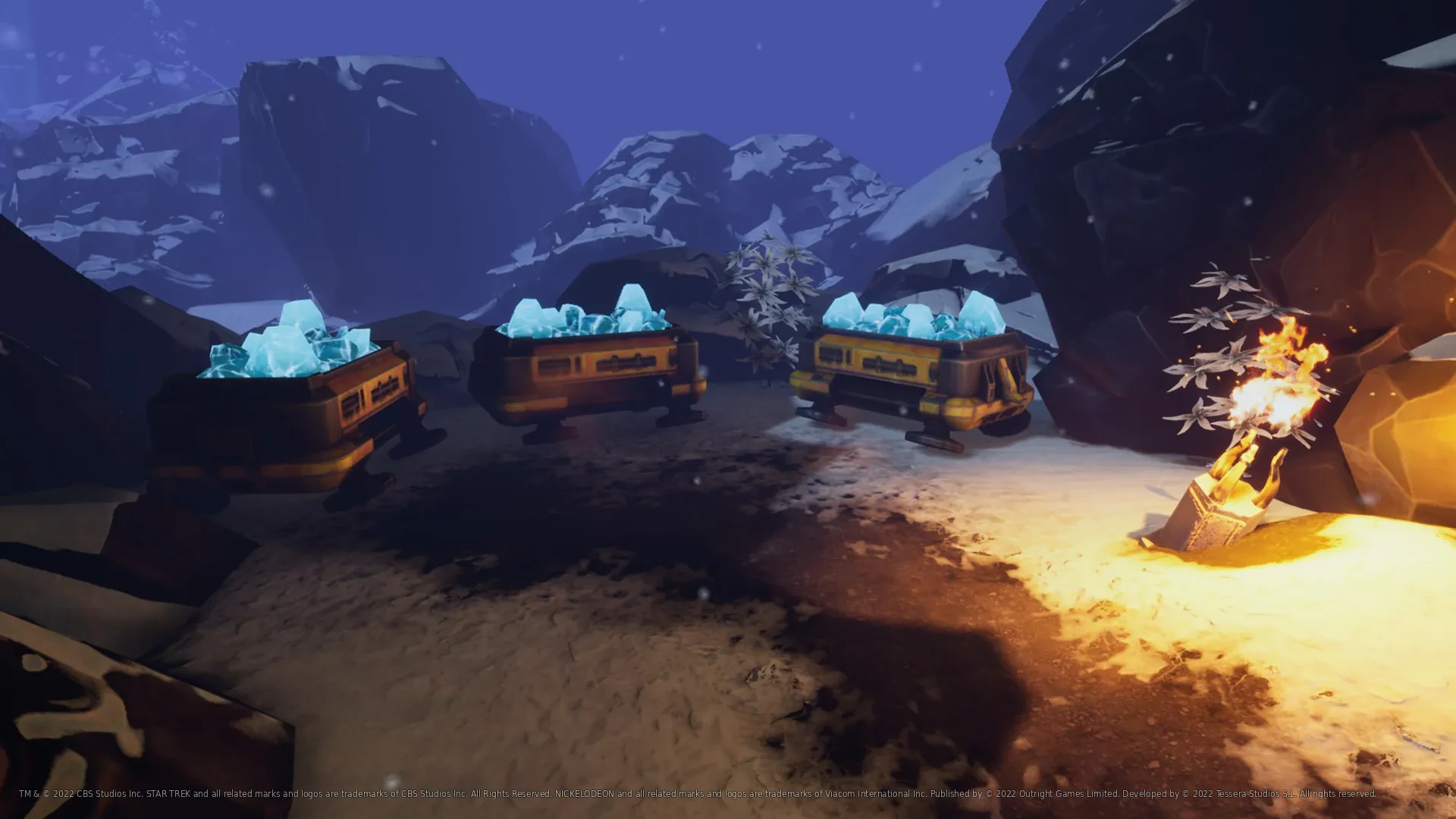
- Resource distribution: I placed and tuned every mineral, breakable and combat drop across the levels — keeping reward pacing a deliberate design choice rather than something that emerged by accident.
- Pricing & progression: I priced every item against the player's earning curve so upgrades stayed reachable but never trivial — the economy keeps pulling the player forward instead of gating them.
- Combat & breakable yield: I tuned enemy and environmental loot tables to track the difficulty curve, so rewards stayed meaningful as encounters scaled up.
In-Game Economy
Area Overview
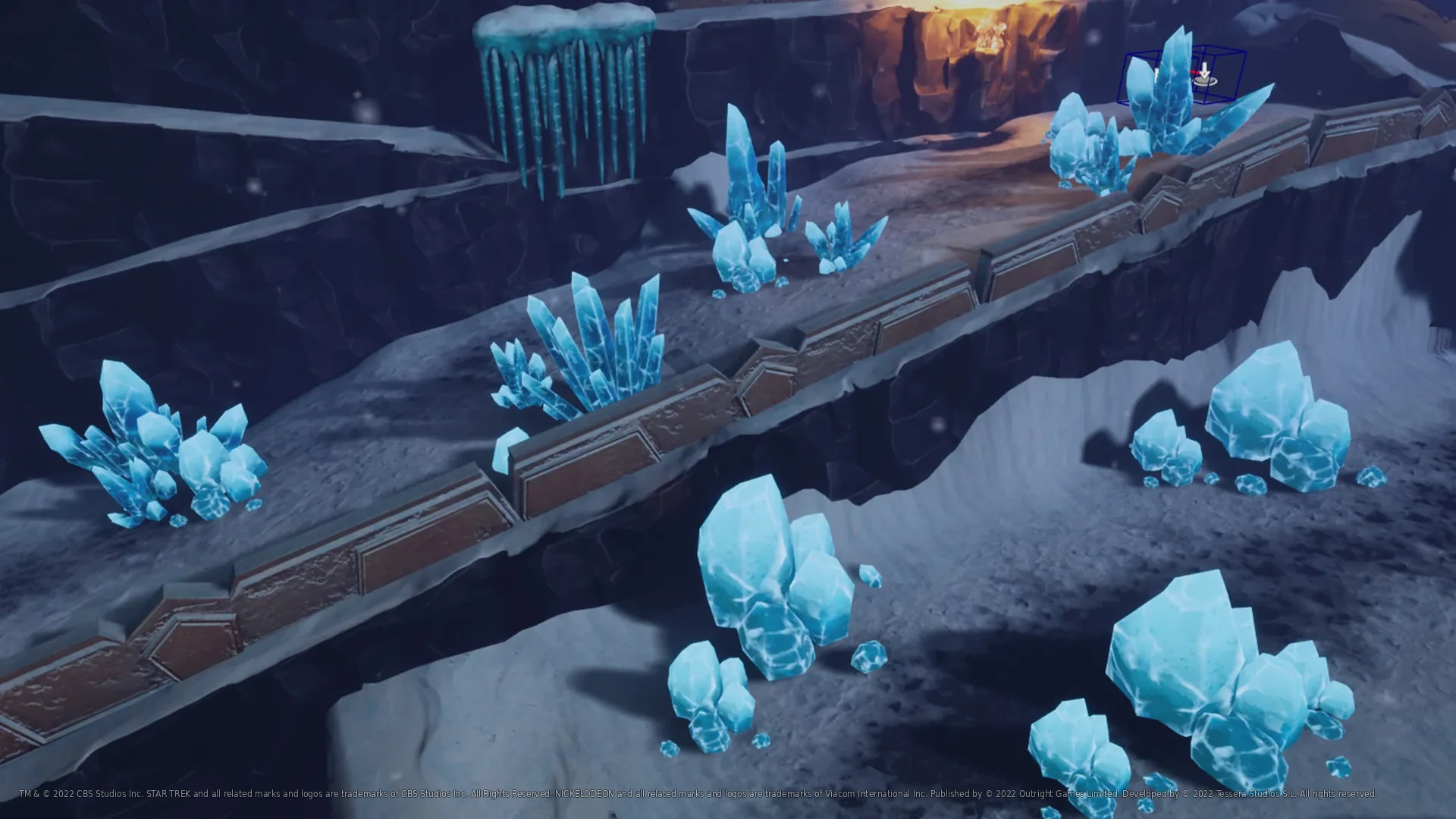
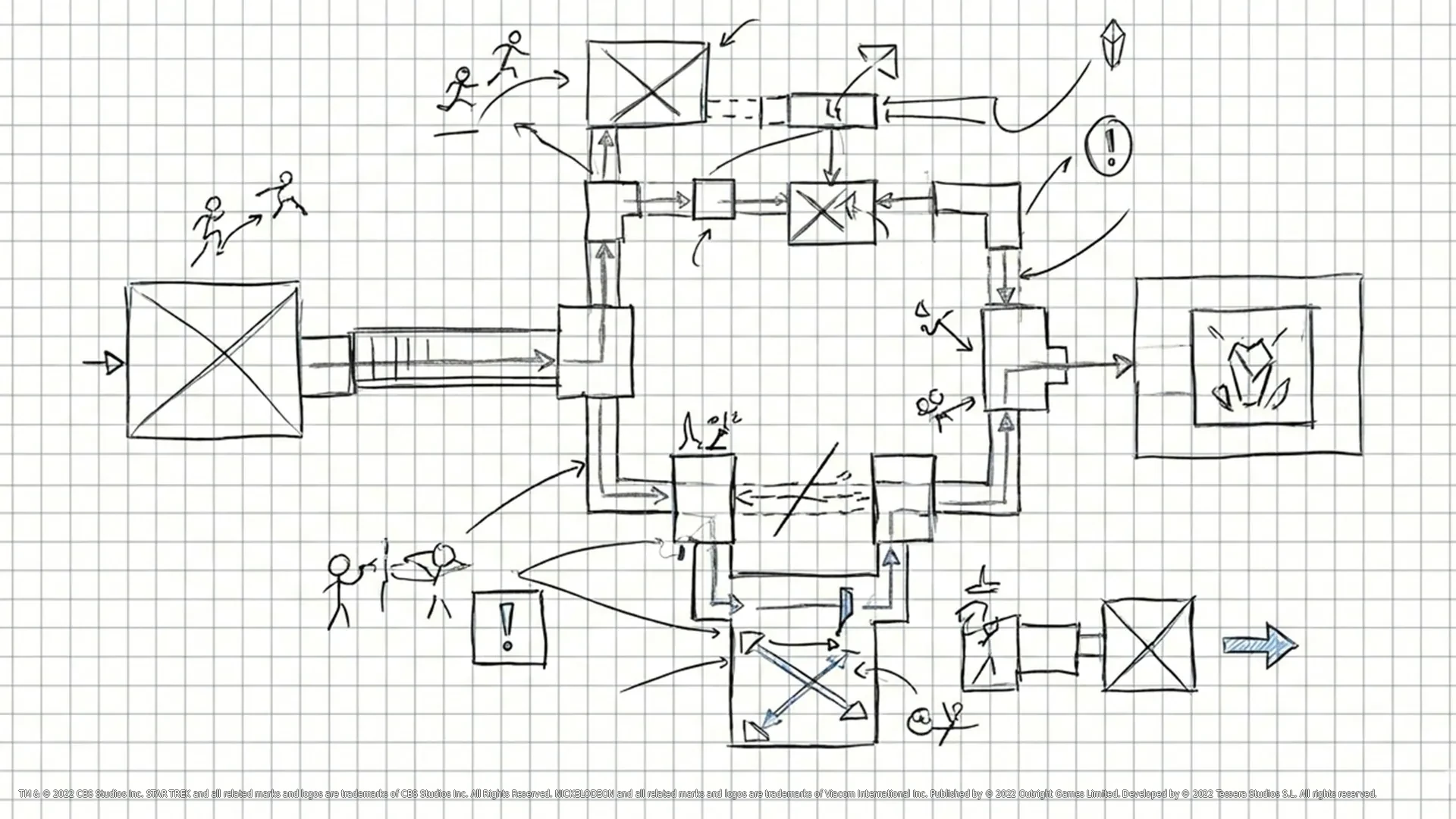
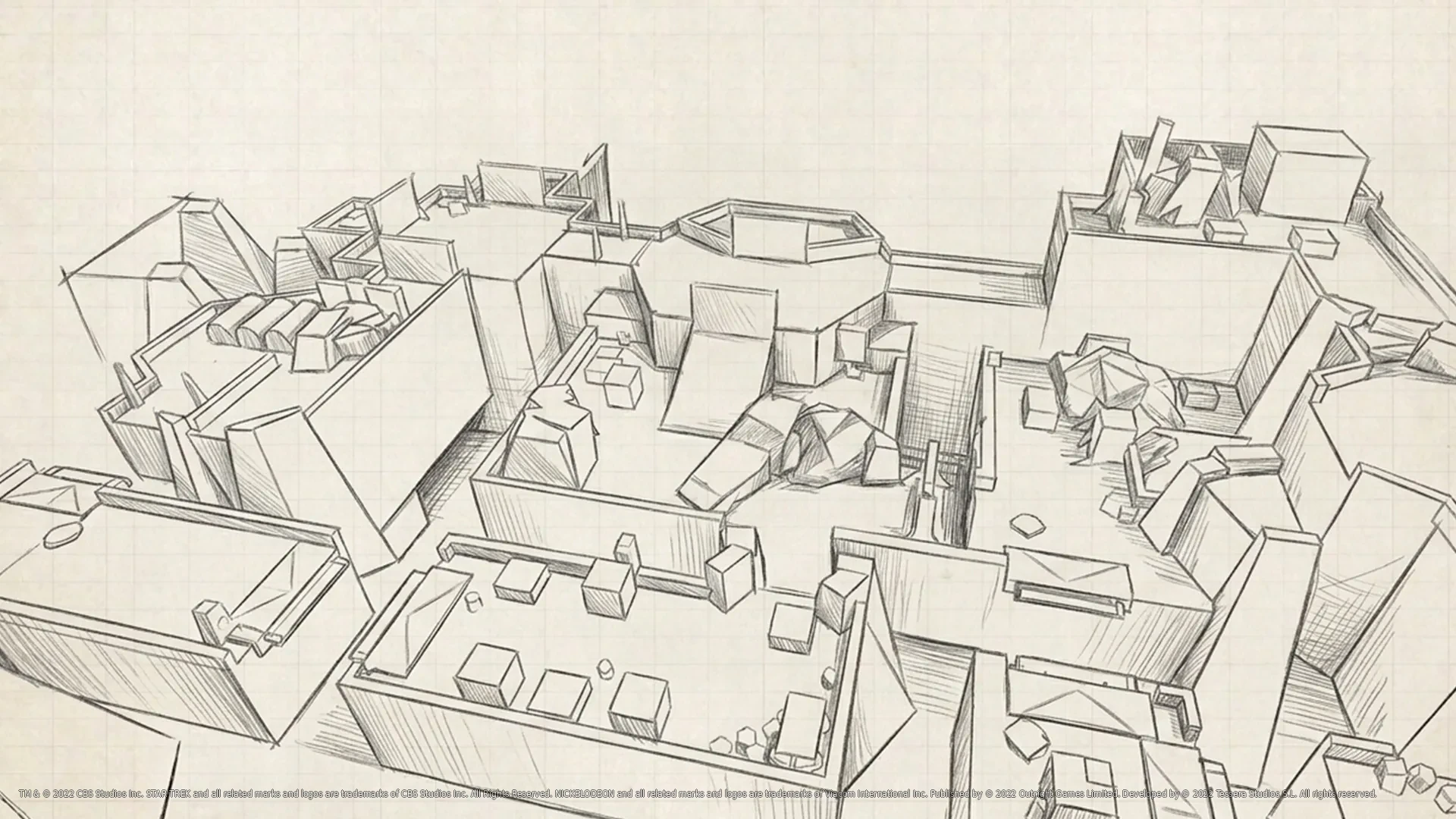
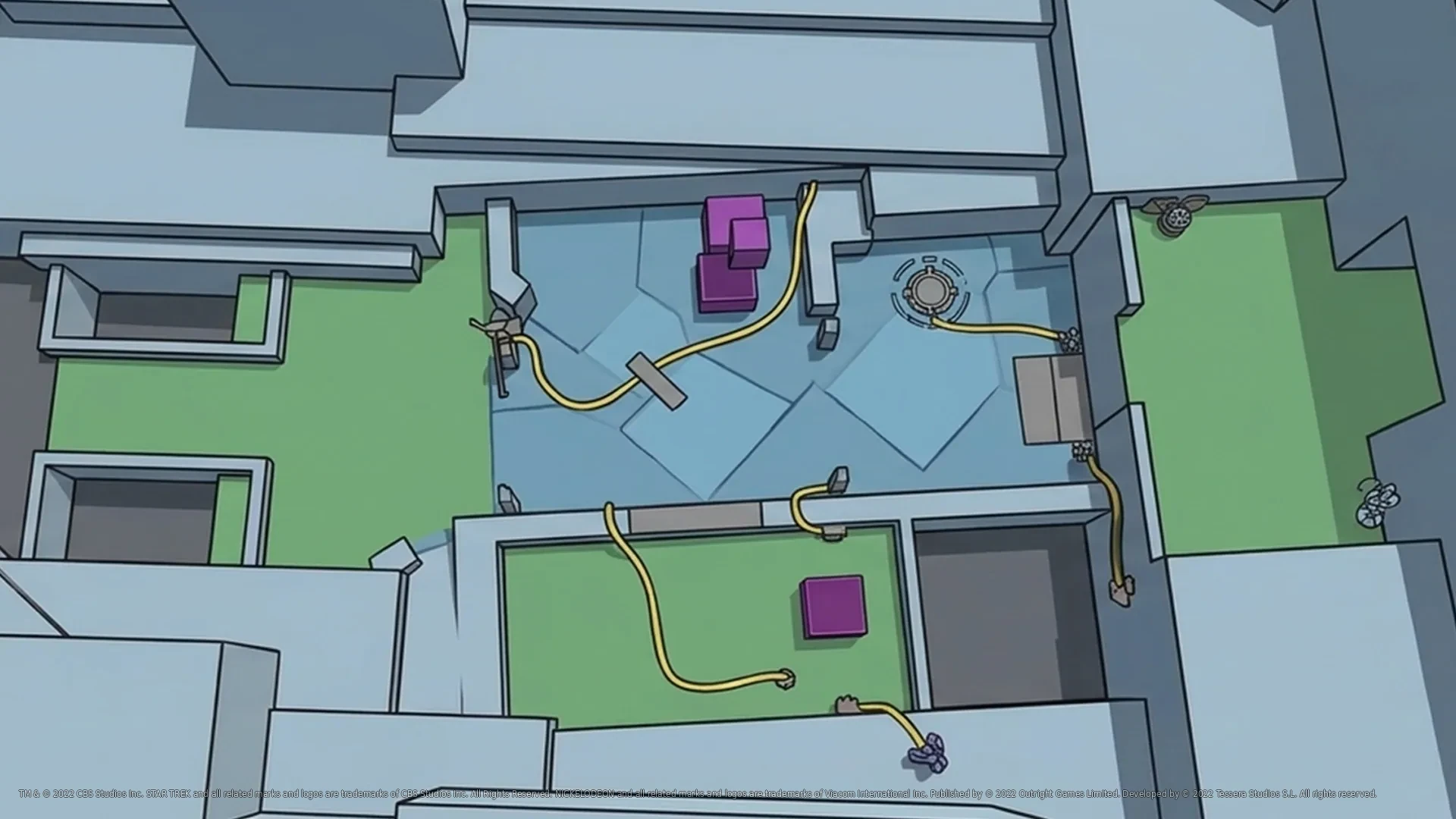
An analysis of the design decisions behind Planet 3 - Level 3, focusing on how the environment's architecture dictates the player's experience.
- Subverting Expectations: Unlike other planet finales, this level presents the challenge of being unable to enter through the main gate, forcing a shift in mindset and encouraging creative problem-solving.
- Organic Discovery: Use of paths hidden in plain sight — subtle environmental cues guide the player without diminishing the sense of exploration or the eureka moment.
- Pacing Management: The flow balances moments of observation and calm with peaks of activity, ensuring a smooth transition toward the final objective while maintaining constant engagement.
Area Showcase — Planet 3 · Level 3 · Area 1
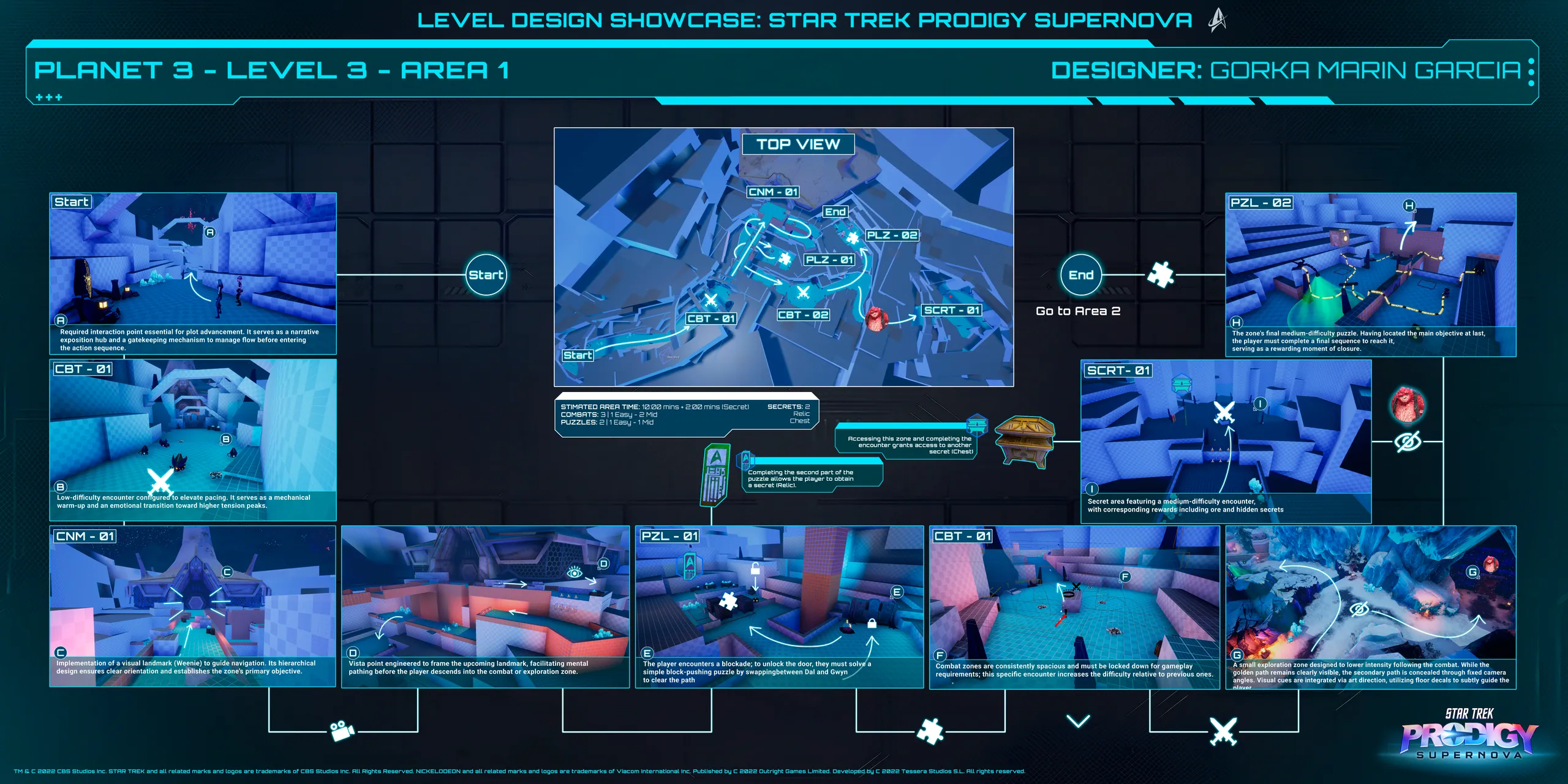
Level Design Pacing Diagram — Planet 3 · Level 3
Level Sequence — Planet 3 · Level 3
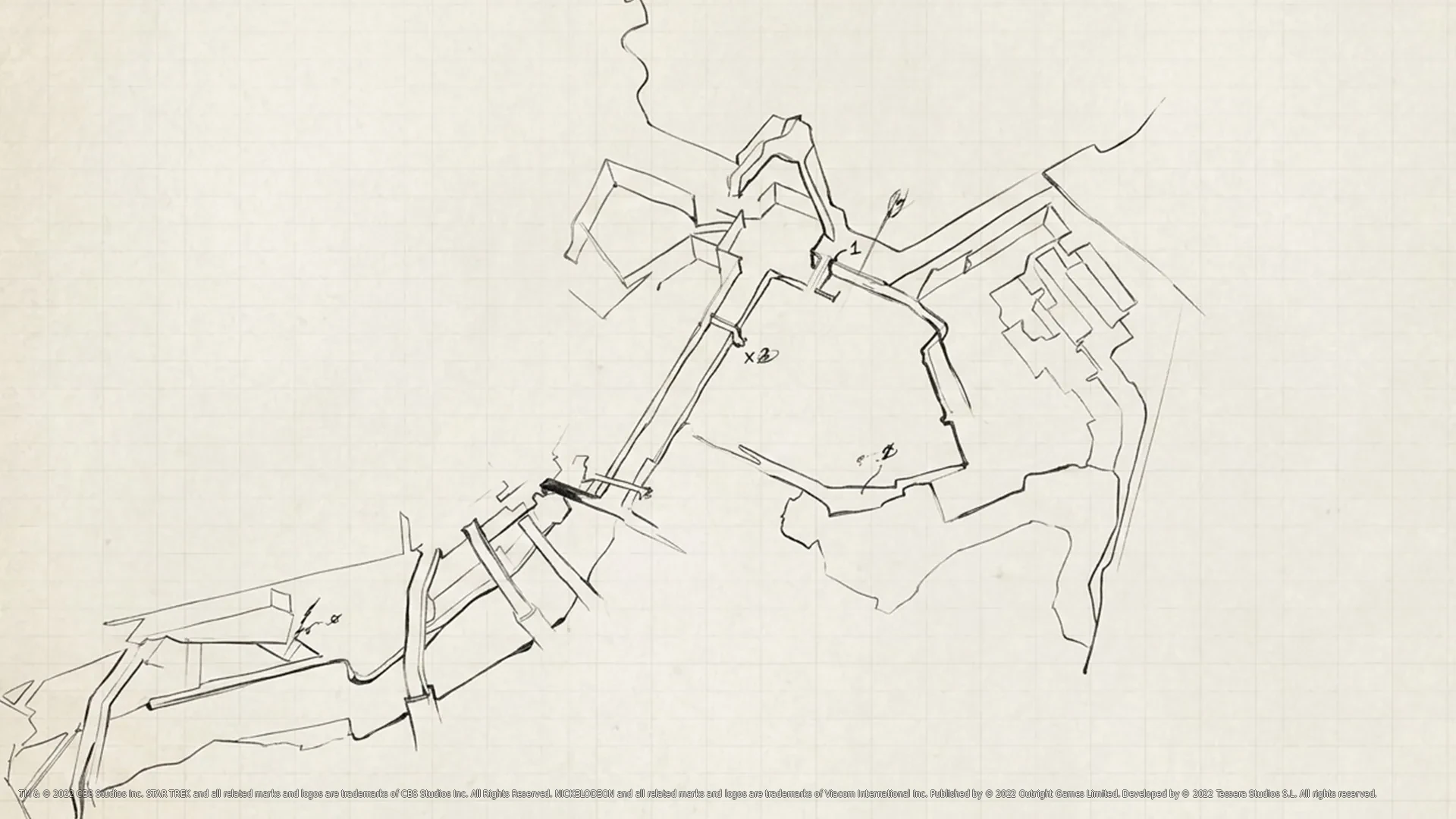
Design Sketches
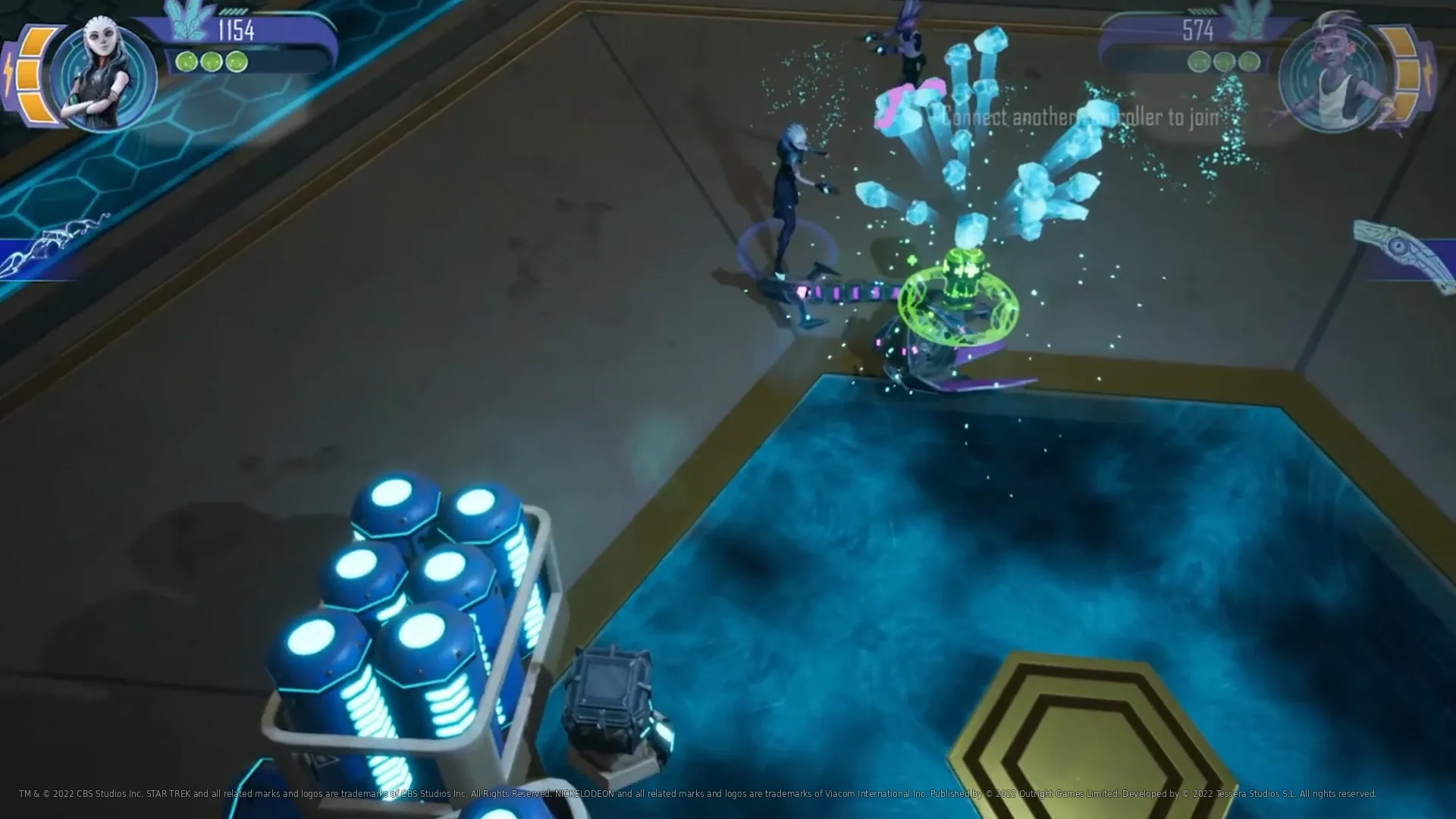
Gameplay — Planet 3 · Level 3
Full playthrough of the level analysed in this section.
Closing Notes
Star Trek: Prodigy – Supernova was my first shipped title at professional scale. Designing across 6 platforms, within a licensed IP, for a co-op audience younger than typical — every constraint pushed me to be more precise, more deliberate, and more collaborative than I'd ever been before.
- Technical Synchronizing two versions of the same level with temporal causality — the Time Puzzles — was the most complex design problem I'd faced. It taught me that the hardest part isn't building the mechanic, it's preventing every edge case from breaking the game state.
- Systemic Modeling the entire economy in Excel before touching Unreal Engine changed how I think about game systems. Separating the design logic from the implementation layer made iteration dramatically faster and gave the whole team a shared source of truth.
- Creative Working within a licensed IP isn't a limitation — it's a discipline. Every design decision had to be justified against the universe, the tone, and the audience. That constraint made the work more rigorous and the result more coherent.
I would document discarded design decisions more systematically. The final outcome is well documented — the TDD, the economy model, the sketches — but the reasoning behind the paths not taken largely lived in Discord threads and conversations. Today I would maintain a live decision log from day one: what was considered, why it was rejected, and what changed the direction. That record is invaluable for onboarding, for post-mortems, and for your own growth as a designer.
Interested in working together or want to know more about the process?